
The Anglican Diocese of Newcastle is committed to ensuring that all people who participate in our worship, programs and ministries have a safe and rewarding experience. God has commanded us to love one another. Ensuring a person’s safety is an expression of that love. The overarching parish safety policy and its key components can be accessed [HERE]
Detailed information in regard to our policies and procedures in relation to screening, training and compliance can be found [HERE].
The Anglican Diocese of Newcastle takes allegations of misconduct and abuse seriously. We encourage victims of crime to contact NSW Police.
We encourage people with concerns to come forward and speak with the Director of Professional Standards (1800 774 945) dps@newcastleanglican.org.au. Survivor Support
Acknowledgement of Country
We acknowledge the First Australians with gratitude for their stewardship of country. In our Parish, we recognise the strength, resilience and continuing culture of the Awabakal and Darkinjung people, and affirm our commitment to walking together in a spirit of truth-telling, justice and reconciliation.


Shop 1, 550 Pacific Highway Belmont
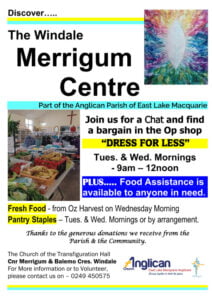
Merrigum Op Shop
The Windale Merrigum Centre Part of the Anglican Parish of East Lake Macquarie Join us for a Chat and find a bargain in the Op Shop. Currently, we are not able to offer Tea and coffee. “DRESS FOR LESS” Tues....Continue reading→
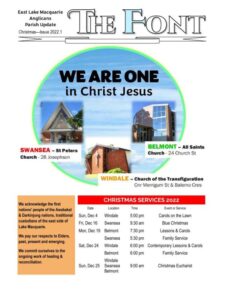
The Font – Christmas 2022
As we come to the end of our first calendar year in this wonderful East Lake Macquarie Parish I am heartened and encouraged by the distance we have journeyed in that time. Just as the Magi were called to follow...Continue reading→
Recent Bulletins
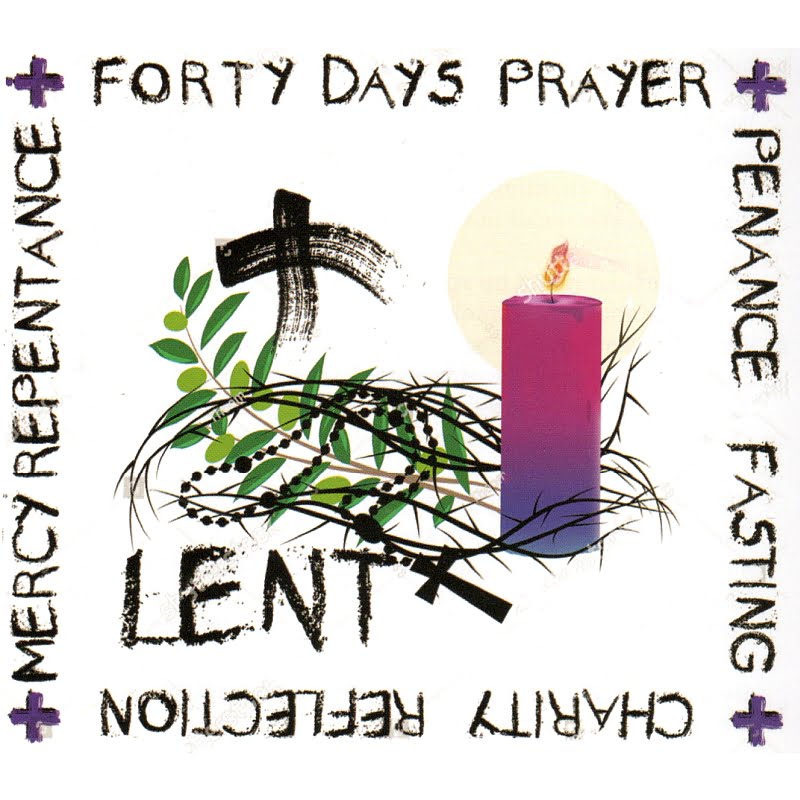
Lent 2024
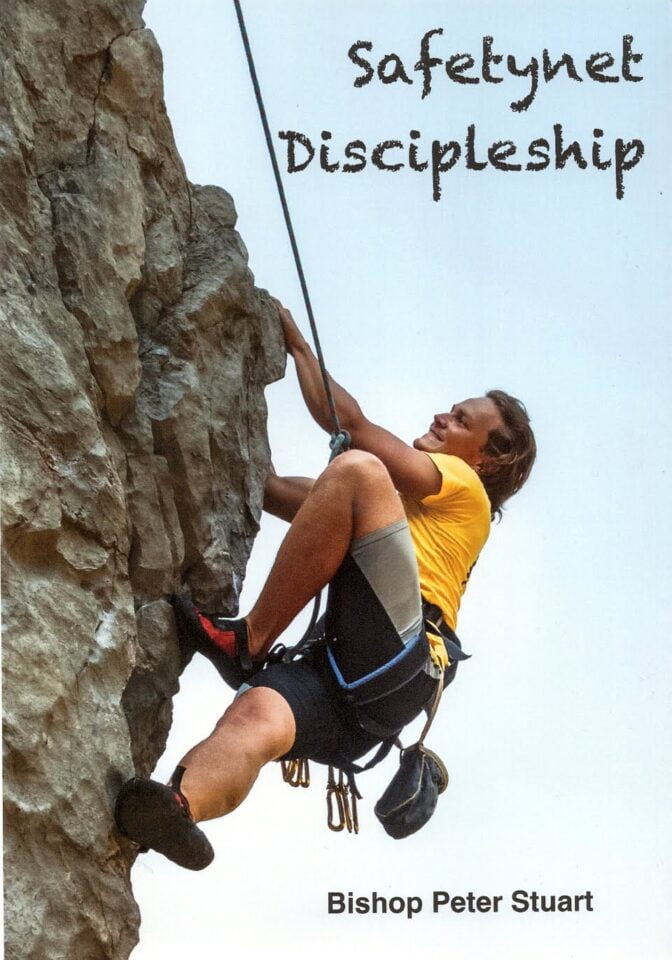
Safetynet Discipleship
Bishop Peter Stuart
This series of Lenten studies will lead participants in a journey through the Year ‘B’ Readings.
Bishop Peter Stuart writes ..... Lent presents us with an opportunity to be more open to God's grace. As we abide in God’s love, God blesses us to become more the person God calls us to be.
This Lent, we invite you to be open to the experiences people have that fill them with fear and uncertainty. These may be brief or lengthy moments. They may be your story. They might be the story of a friend, colleague, or fellow parishioner. They are our shared stories of trauma. We hope that by reflecting on the God of love, revealed in Jesus, who is at one with us on our pain, your faith and discipleship will growBishop Peter Stuart is the Anglican Bishop of Newcastle.
In recent years he has spoken openly about his experience of childhood trauma. He writes from personal experience, a careful study of the scriptures, and reading in contemporary neuroscience.
These refreshing studies look at the Sunday Gospel readings. They are intended to help you reimagine yourself as a disciple of Jesus.
Seven studies are provided from Ash Wednesday through to Palm Sunday week.
This is the book that we will use for the Lent Study Groups in the Parish this year. If you would like a copy they can be had from one of the Parish Clergy for $12.00.
NB: The photo on the cover is not Bishop Peter, his name appears as the author of the book.
Font Advent 2023

Dear Friends
It has been a very busy year in the Parish of East Lake Macquarie, with all kinds of things happening that have brought exciting new challenges and wonderful blessings. Sometimes it can be difficult to see where we are going but like Mary, we put our faith in the Lord and boldly step forward. This year we have embraced that and as we look back, we can consider our many wonderful achievements.
The Clergy and people together have negotiated around a sometimes complex roster to provide continued regular services across the Parish. Volunteers have generously given their time and skills to assist in the churches, the shops and all our other activities of which I am very thankful for. This Parish has worked together to meet the requirements that continue to emerge around care and safety.
Just as the Christmas story shows us, life is always about change and new beginnings. The challenge is often in remembering that this is a journey that we need to make together and know that it is the love of God that will keep us moving forward. God is with us!
Look, the virgin shall conceive and bear a son, and they shall name him Emmanuel’, which means, ‘God is with us.’ Matthew 1:23
This year has also brought terrible conflict across the world which we pray will come to an end. As together we prepare to celebrate the Christ child and what that baby means to the world, we should feel called to embrace all of our Sisters and Brothers with care and respect.
This Christmas we need to remember to find love and forgiveness in our hearts and no matter what challenges we are faced with to meet them with the love of Christ and the understanding that God is always with us.
I hope that you will be able to join us at our services to celebrate and remember the wonderful gift of love that Christmas brings.
May you & those you care for share the love and blessings the Holy Family brings to all of us.
Father Peter
Creation Sings a New Song to the Lord

A Season
James McAuley, Australian poet and Christian, wrote a hymn we sometimes sing, Creation Sings a New Song to The Lord. This, of course, was not a new concept, but simply a more contemporary expression of the idea. Most of us, at some stage in our lives, have sung All Things Bright and Beautiful, by Mrs. Alexander, though perhaps we didn't sing the third verse, as that fell out of fashion. Francis of Assisi wrote his Canticle of the Sun and shared similar credentials, and indeed if you have a look at Psalm 8 'O Lord our Governor, how glorious is your name' we realise that this is a venerable tradition which we share as we celebrate Season of Creation.
We are not getting caught up in side issues, or being distracted from our main purpose. The Five Marks of Mission rightly include our commitment to strive to safeguard the integrity of creation and sustain and renew the life of the earth.
The wisdom of James McAuley is that he understood that we join with Creation in the Unending Song of Praise. We stand in Creation as part of Creation, and we take our part in the Choir of all Creation in singing a Canticle of Praise to the Creator.
We apprehend our unique role as Stewards of Creation. When someone we care for and who loves us, entrusts something to our care, our response mirrors our response to the one who has placed it in our trust. The ecology of this planet is part of this trust, and it is indeed an intergenerational trust. Others exercised this trust before us, and still others will exercise it after we have left and handed it on. This sacred trust is bigger than the personal temporal advantages we may see in the short term. We need to have a long-term view, for we have both history and the future in our field of vision.
Politics
Many are concerned that this is simply the Church being too Political. Christianity is not a Political Party and Jesus did not come to start a political movement, however, there is no doubt that there are political consequences to a position of faith. The real challenge for us is to ensure that our faith informs our politics and not the other way around.
Ecology
Whilst the contemporary term is Environmental Studies, for a long time we spoke of Ecology, and the value of this term is that it is ultimately found in the relationship between us and our environment, and between the whole created order and the Creator. We should not objectify the ecosphere as an ultimate end in itself.
Spirituality
We live in a period where there has been a significant secular awakening to the importance of the environment and the consequences of human interaction with it. We celebrate our shared views and stand firm in our conviction that this is for us, not just leaves, but also roots, not simply fear of doom but also song of praise.
Confirmation 2023

Confirmation
23 July 2023, we gathered for the only service in the Parish for the day, to worship the Risen Christ, to celebrate the Feast of Mary Magdalene, and to rejoice in the Confirmation of Four of our members.
Confirming Bishop: Bishop Charlie Murry, Assistant Bishop, Coastal Episcopate.
Confirmees: Lilli Ramplin, Daniel Sylvester, Matilda Sylvester, Soraya Timms.
Bishop Charlie reminded huis how central to the story of the Resurrection of Jesus Mary Magdalene is, and how much it is our part to follow in her footsteps in telling our sisters and brothers that Jesus is Risen for the dead.
The service was a great celebration, of the inclusive family of the Church, and was followed by brunch in the Hall.
We wish Strength and Faith for our new confirmees and for ourselves, as we together continue to shine as a light in the world to the glory of God the Father.

Encounter – Naidoc Week

Bishop Peter - finding our common mind.
As human beings, we are always engaged in a complex balancing act. Our worldviews are never exactly the same as someone else’s. We find ways of accommodating other people’s preferences. They, in turn, adapt to ours.
Sometimes, this work is easy. The give and take may not cost us too much. The issue may not be that important or we can find a sustainable position. Other times, finding a common mind is hard work. The issues at stake are too important. They must be wrestled with.
The Christian worldview is that a common mind can be found. Christians understand that God’s desire is that we are united. Our unity is shaped by love. Love is the essence of God. Love is what God is all about. Human beings are invited to love God, themselves, others, and creation.
The Christian ideal is that no answer should prevail if it is unloving. Yet, we know that they do. There are often losers as well as winners. Power is misapplied and abused everywhere. There are people who are conditioned by their circumstances. They are taught not to speak about their needs, or punished if they do.
History shows that the church, as an institution, has wielded power. It has often sought out and sided with the powerful. For much of recent history, this has meant that a white, European, male view has dominated. But this is being challenged.
There were at least four powerful movements in the 1950s and 1960s which are still finding their voice today. These were women’s equality, equity for people of colour, decolonisation, and justice for gay and lesbian people. These were social movements and church-based movements. Lay and ordained Christians were very active in this life-changing work. The same era witnessed the fresh wind of the Spirit in the Catholic Church through Vatican II.
A loving world sees Aboriginal and Torres Strait Islander people shaping the affairs of this land that God entrusted to them. A loving world sees every person as able to become all that God has created them to be regardless of gender or sexuality. A loving world welcomes decolonisation at every level where people misuse power. When we live in a loving way, everyone is safe and can flourish.
In my view, there are sound theological and spiritual foundations for pursuing justice and equity for all people. I strongly support the Voice of First Nations People to the Commonwealth Parliament. I am a committed ally of LGBTIQA+ people. As a nation, we are seeking a common mind on the Voice. In the Anglican Communion, we are seeking a common mind as we respond to different understandings of human sexuality.
As a Christian, I know that all my positions are provisional. As the water drips on a stone and it changes, so will I continue to develop and adapt my insights. I discuss, read, reflect, meditate, and pray. I seek the mind of God. None of us is perfect. We are all forgiven. Our best selves can take time to emerge.
I want to commend two practices to you. In your meditation and prayer – wait upon the Lord. Deliberately spend time in silence, calming in your inner turmoil, and wait for the nudging insights of the Holy Spirit. They will come. God will always lead us to love.
In your conversations with others – be your best self. Our best self is one who sees others with loving and compassionate eyes. We seek to see people as God sees them. We aim to let our shades of prejudice and hurt fall away.
My prayer is that in healthy and holy ways we will find a common mind. That we will allow God to work through us and make God’s world a better place.
Corpus Christi
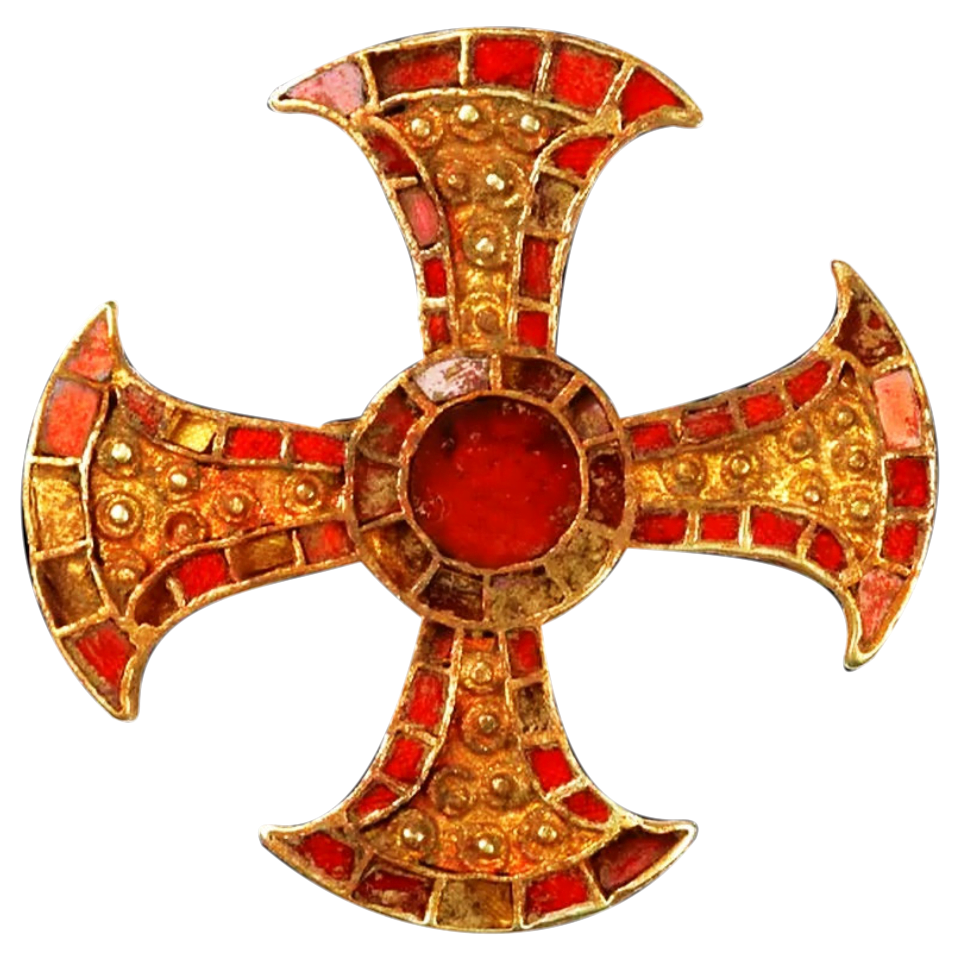
The Body of Christ
Introduction
The Feast of Corpus Christi celebrated in various parts of the Western Church since the 13th century. As a feast, it was set aside to provide for a specific reflection on the Holy Sacrament, the Body of Christ.
Originally the observation was on the Thursday following Trinity Sunday, however, in many places, it has come to be observed on the Sunday after Trinity Sunday. The linking of Corpus Christi to the octave (8 days following) Trinity Sunday may not seem immediately apparent, but read on.
It was not adopted in churches following the Continental Reformation and was not formally set aside in any of the classic Prayer Books of the Church of England, including 1549 and 1662. What is clear however is that in some places the observance continued, and was permitted, as a minor solemnity.
Does it have meaning for today?
Well the first way we may speak of the Body of Christ, is not so much in the sacrament as it is in the person of Jesus. Although the 2nd person of the Trinity existed from before the beginning, it is in the incarnation, God born in time and space, that we know Jesus. Born to an unwed mother, in an occupied territory, and away from home, the Body of Jesus often speaks of vulnerability. The child in the manger attracts the attention of both shepherds and wise men, and the ire of the powerful. The Body of Jesus on the Cross again attracts attention, to the horror of what we can do to one another, the brutality of political expediency, and the vulnerability of the innocent.
Nonetheless, that is hardly the full picture of Jesus as presented in the Gospels. Jesus is presented in solidarity with asylum seekers and refugees, as an itinerant preacher who spoke with authority, as a healer, a carer, and as a person who did not seek the crowd, though at times the crowd sought him. Jesus is a storyteller, whose stories often have an impact and a power that became apparent later.
Of course, the first intention of the Feast was to reflect on the Holy Sacrament of the Body of Christ. This builds on several teachings of Jesus, that perhaps became more apparent later. In John 6 we have a discussion based on Jesus’ declaration ‘I am the Bread of Life.’ This is one of the seven ‘I am’ sayings of Jesus in the Fourth Gospel. In Matthew, Mark and Luke we have the accounts of the Last Supper, with words we are all familiar with, as they have become part of our regular celebration of the Eucharist.
In the Western Church, we have tended to use the word Sacrament to describe what is going on, The word suggests a sign pointing to something more, a deeper meaning. The Eastern and Oriental Orthodox Christians tend to use the word ‘Mystery’ which, whilst very similar suggests something more than a sign, but perhaps something that has no words.
Ultimately Christians everywhere acknowledge Christ's presence here as we break the bread, for this is what he promised us on the night of his betrayal. The encounter of the tangible and the intangible, in the same moment. Of all the reasons we go to Church, perhaps the most profound is that we go to be in the presence of Jesus.
This shared encounter in the broken bread in some ways is the essence of what it is to be Church. In the book of Acts, we are told that they gathered on the first day of the week, for the breaking of the bread.
Of course, Church does not end there, and it should not. The enabling meal at the table strengthens us to go out into the world, carrying the Body of Christ within us into the many situations that form our daily life.
Ludwig Feuerbach, The German philosopher, argued that ‘we are what we eat - man is meat’. Whilst the original construct was addressing the problem of malnutrition, it was also clearly picked up by those who wanted to argue a case for atheism.
The Church of course has an understanding of self as The Body of Christ. We reiterate this at every Eucharist as part of the Greeting of Peace. This of course is based on several New Testament passages including “Now you are the body of Christ and individually members of it.” 1 Corinthians 12:27.
This seems sometimes to be a big call, and indeed sometimes at best it may be an aspirational challenge. Surely we are not always as good as this, and we constantly meet people who have been damaged one way or another through their dealing with what they understand to be the Church.
Church in this sense of course is not the building, nor is it the institution or the corporation, but simply the believing folk. So whilst we fail, and fail again, we keep getting up and going again, determined to do better.
To misuse Feuerbach we might want to say, “We are what we eat We are the Body of Christ.”
In the Octave of Trinity
So now that we understand that it makes sense to understand the Body of Christ in these three distinct ways, as the Man of Galilee, as the Holy Sacrament of the Eucharist, and as the Body of Believers, it seems only appropriate that the place in the liturgical Calendar for this is within the octave of Trinity.
Areopagus
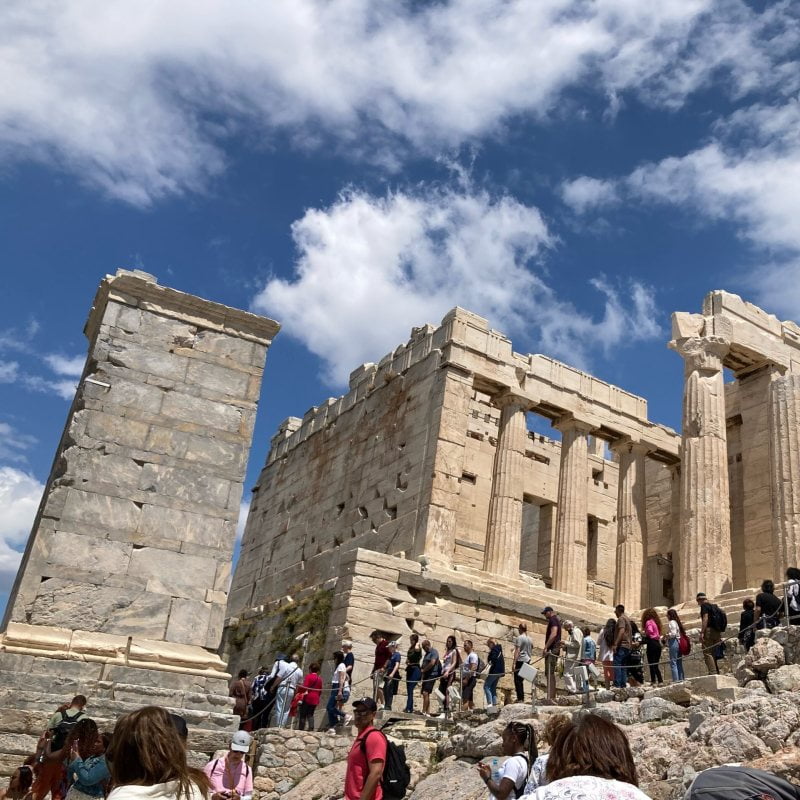
Aeropagus
Acts 17:22-31
This passage gives us plenty to think about our approach to a number of things, especially the way we present the Gospel to others.
Acts, attributed to Luke, author of the 3rd Gospel. He was a well-educated greek-speaker, probably a doctor. He writes some of the best Greek in the New Testament, His approach to history is clear and includes times and places. This is part of the 2nd Missionary Journey so happened around late 49 AD or early 50 AD. The Aeropagus was a rock platform on the North East Corner of the Acropolis.
Luke records Paul speaking in the first person. It is likely that either Luke heard these events, or had an account from someone who heard these events. It is highly likely in Greek we have some of the words that Paul spoke, though given other accounts of Paul’s preaching, this is a highlight summary!
Paul starts addressing the Athenians directly on their own terms and in their own context. He does not start on the basis of what they are doing wrong, but rather by commending them for what they have understood. This of course is quite different to those who want to start by telling people what they are doing wrong.
So we find Paul starts with what they already understand and builds from that. He does not rubbish any of the other Gods, and not even the ‘unknown God’ even though that may have been an easy approach.
Rather than tear down Paul builds up and moves from the known unknown to the unknown known. He moves from the limitations of the physical to the opportunities of the spiritual.
We are challenged in our approach to people, to be looking for what they have understood, not just for why they are wrong.
Church History presents us with some examples where we should have listened more before tearing things down. Copernicus Kepler and Galileo argued that the earth revolved around the sun. In defence of the understanding people had of God and the Bible, they were decried and denounced because the Bible said differently,
A more constructive approach would be to listen and observe more and take the approach of Paul at the Aeropagus.
In Him we live and move and have our being, for we too are his offspring.
The resounding crescendo of this address is a generous and broad understanding of who Christ is. For Christ is the supreme essence of our being, our foundation, our purpose and our hope. Yet this is an inclusive call, not an exclusive call.
Our political life, and indeed much of our approach to issues in general is adversarial. Too easily and too often this ends up in the mud of derision and division. The approach Paul presents here is quite different, engaging and inclusive,
Parish Cell Groups
Strengthening faith and building community......
One of the most vibrant parishes where I have worshipped recently is the Cathedral Parish of Saint Andrew in Singapore... One of the elements contributing to its life is the existence of parish 'cell groups'...
It seems that in the landscape of the Church, one of the most impactful and effective ways for its members to grow in their faith and build meaningful relationships is through Parish Cell Groups (PCGs)..... Gathering in small groups provides spaces where individuals can connect, share meals, reflect on Scripture passages, pray and support one another in their spiritual journey..... They typically consist of around ten members providing an intimate environment where participants can build solid relationships and feel comfortable sharing their thoughts, struggles and joys... Parish Cells can be formed on the basis of geographical closeness (suburbs), interests (eco focus, crafts), spirituality (Cursillo, meditation), or preexisting parish groups (Mothers' Union, pastoral care, etc)...
Apart from the personal growth of members of Cell Groups, the potential exists for evangelism and outreach... Relational evangelism works best in Parish Cells... Members of Cells have unique opportunities to cultivate relationships with unchurched people. Through its relationally based outreach, members of Cells manifest the life of Christ in a bonded community of Christians, evangelism is easier and more enjoyable... As a group, they have the potential to support neighbours, friends, and extended family members and offer a practical witness of God's love in the world.....
Life in a Parish Cell Group enables personal gifts to be identified and developed... Under the guidance of a Parish Leadership Team, PCGs can be nurturing spaces for personal growth in spirituality, leadership, evangelism and service... As in a human body, healthy cells combine to create an energetic, life-giving person..... so in a Parish, vibrant Cells combine to enable the Parish to bring life and the love of God to the World around it...
Kindness

Kindness
The Simple Act That Can Change Someone's Life
Kindness is a simple act of compassion that can have an incredible impact on someone's life. It's a trait that is found in the most gentle, sincere, and caring individuals who are willing to go out of their way to lend a helping hand. Even small acts of kindness can make someone's day, alleviate stress, promote happiness, or completely change someone's perspective on life.
It can start as simply as greeting someone with a warm smile or holding the door open for a stranger. Or, it can be as significant as volunteering at a homeless shelter, paying for someone's groceries, or donating to a charitable cause. Regardless of the magnitude of the act, the power of kindness lies in the intention behind it.
Kindness also promotes contagiousness or a ripple effect, as one act of kindness can inspire others to do the same. It sets a positive tone and creates a chain reaction of good deeds that can lead to a more compassionate and empathic society. Studies have also shown that kindness can improve one's physical, mental, and emotional well-being, as it boosts positivity, reduces anxiety and stress, and enhances social connections and relationships.
Kindness is not only limited to our human interactions, but it extends to all living beings, including animals and the environment. Being kind to the planet means being aware of environmental issues such as climate change, pollution, and sustainability, and taking actions such as recycling, conserving water and energy, and using eco-friendly products.
In a world where negativity and hostility are prevalent, kindness can serve as a beacon of hope, love, and compassion. It is a simple act that can lead to a world of difference, and it's up to us to spread kindness wherever we go. As the familiar quote goes, "Be the change you want to see in the world."
Kindness is one of the Fruits of the Spirit listed in Galatians. 5:22-23 "By contrast, the fruit of the Spirit is love, joy, peace, patience, kindness, generosity, faithfulness, gentleness, and self-control."
Reading Sheets
Country

Words have meaning and convey meaning. Sometimes, across cultures, those meanings can be difficult to translate in a way that truly conveys the meaning.
If I look for dictionary definitions of ‘country’, I am likely to find something like this:
A country is a distinct territory with defined borders, a permanent population, and its own functioning government. It acts as a sovereign state that manages its own internal affairs, economy, and relations with other countries. (AI-generated text)
When Aboriginal and Torres Strait Islander people speak of Country, this is not really what they mean, and indeed barely a pale reflection.
If I were looking for what First Australians might mean when they speak of Country, I might end up with something more like this:
For Aboriginal and Torres Strait Islander peoples, Country is a living, breathing entity and the ultimate source of life, identity, and culture. It goes far beyond the Western concept of land ownership, serving as a deep, holistic connection that shapes existence itself. (AI-generated text) (
The site Common Ground also has an article discussing this idea. (https://www.commonground.org.au/article/what-is-country)
When the Parish Acknowledgement of Country was recently updated, the term ‘country’ was used specifically with this idea of meaning deeply embedded in it. The words of that acknowledgement read:
Acknowledgement of Country
We acknowledge the First Australians with gratitude for their stewardship of country. In our Parish, we recognise the strength, resilience and continuing culture of the Awabakal and Darkinjung people, and affirm our commitment to walking together in a spirit of truth-telling, justice and reconciliation. (https://elm-anglican.au/)
People who have worked in Papua New Guinea will be familiar with terms such as ‘place’ and ‘place belong me’ (These are expressions well known in Pidgin English), which convey a sense of connection to an area, a tribe, and a community over time.
Disconnection with Country, or Place, is not simply a geographic thing; it is an emotional, social and spiritual reality as well, and reconnection is both liberation and redemption.
Europeans brought to this Australia ideas of fences and land ownership, which may be tidy at one level; however, this view of the land would struggle to come to terms with the traditional idea of Country as understood by the first Australians.
Ironically, Europeans also replicated their own connections to their old Country as they replicated place names, such as New South Wales, Newcastle, Swansea, Belmont, Cardiff and others, which were simply recycled uses of place names they were used to.

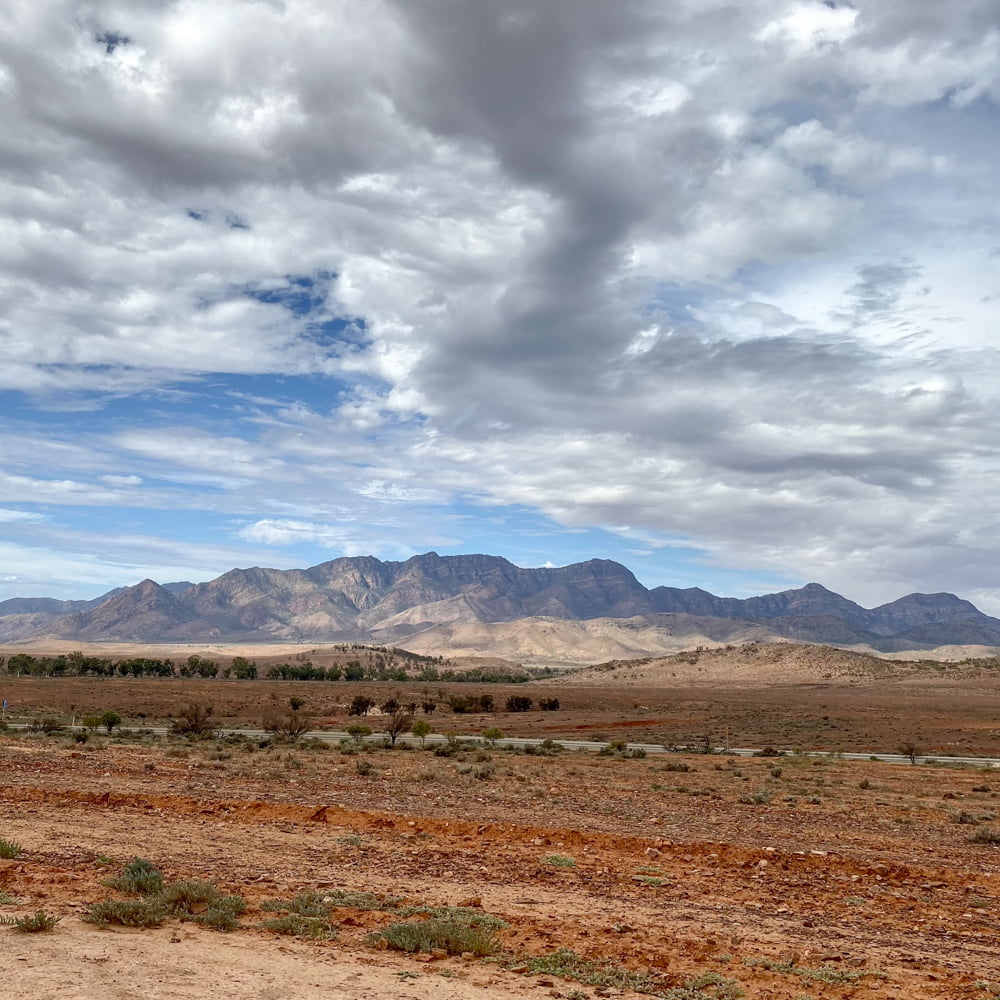
As Christians, indeed as Anglican Christians, we should be able to make some sense of Country from a First Australian perspective. We agree that life is more than meets the eye, more than energy and atoms bumping into each other. We might call it the dreamtime, or the spiritual world.
As Christians, our place, our country, is ‘in Christ’ (2 Corinthians 5:17). We express this in terms of Church - Ecclesia - those called out. Whilst the Church exists in time, it exists through time, and through geography as we express in the Nicene Creed - We believe in one, holy, catholic and apostolic church (The Nicene Creed.). It is here we find not simply belonging without ownership, but life, and the ground of our being.
This, of course, we encounter in many ways, not least of all in the local expression being our Parish Church. We know this very clearly in our Parish, having recently gone through the process of amalgamation and the closure of some churches. We have come through this and can breathe again.
If we reflect on our experience, perhaps we will be better able to understand what First Australians are saying. Our commitment to the path of reconciliation, and ultimately makarata (The journey forward after making peace), asks us to listen deeply and find connection built on mutual respect and integrity.
Abandonment is not an abstract feeling. It has the shape and sound of resentment. (Thomas Mayo - ‘The Monthly’ June 2026 in the article ‘For the love of Country’ p 24.)
Thomas Mayo’s rich and deep understanding of both Aboriginal and Torres Strait Islander conscience, as well as the needs of a modern nation, provides for the welfare of all, which means we need to find ways through this more meaningfully than we have.
‘Country’ is a term that includes its Indigenous context and meanings has only entered the lexicon of the History discipline relatively recently. In part, that recognition of country is an ethical one premised on the understanding that Indigenous knowledges had been excluded from Australian History for the better part of two centuries. ( Anna Clark, ‘The Making of Australian History’ 2022 Pengin Randon House Australia p 264)
Clearly, part of this is that we all know and acknowledge that Australian History did not begin in 1788 or 1770, but in the time before, where we struggle to find dates.
It is easy for our Acknowledgement of Country to slip into a routine of a checklist we tick off; however, it is also possible to allow that familiarity to become part of our ingrained understanding as we walk towards a positive future for all Australians.
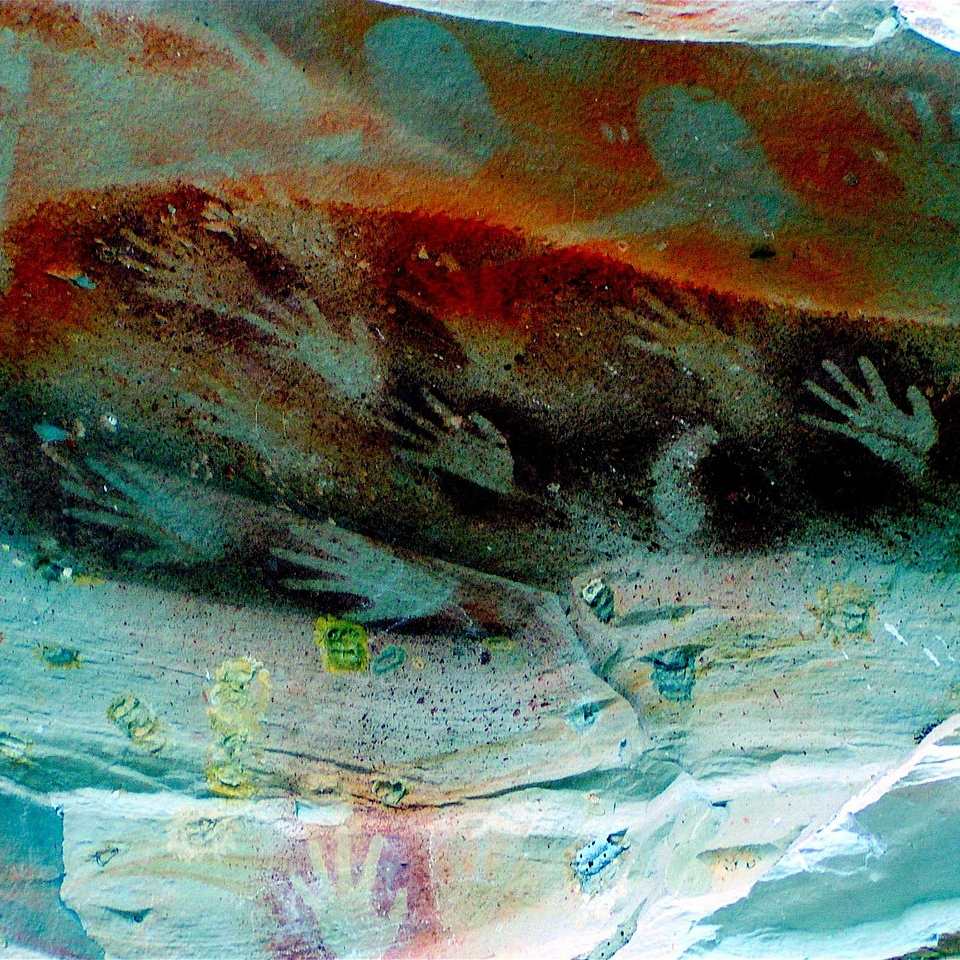
The Funeral Look

The Funeral Look
I recently attended the funeral of a longstanding friend in a rural community. I had known the lady for nearly forty years, and as I stood there, I recalled that we had first met when I was helping with arrangements for her mother’s funeral.
Naturally enough, I reflected for a moment on her mother’s funeral as opposed to the funeral I was attending. The earlier funeral was in the church with the customary rites and forms of an Anglican Funeral. Today we were in the shade of a bushland chapel in the funeral park, with a clergyman in a suit and tie, and a loosely semi-liturgical form, though largely secular.
At the first funeral, probably nearly all the men wore a coat and a tie; today, apart from the minister, there may have been two or three ties. Dress standards have changed in our society in the intervening years. Both funerals would have had about 150 people, and I don’t think it is that we care less, but rather that we don’t dress for the occasion.
Of course, you don’t go to a funeral to look and see who is there or who is not; yet we have to look somewhere.
Perhaps the first place we look at a funeral is back over the years we have known the person, perhaps with sadness at the end of life, perhaps with gratitude for the road we shared with the deceased. More likely, it will be some of each together with other emotions.
Having looked back at where we have been, we will also look forward to what is ahead. For most Christians, we look forward to life in a new dimension, the hope of heaven and the glory of the resurrection. We may have different ways of expressing the hope that is within us.
The last lines of the Nicene Creed express what unites this belief in these words:
We look for the resurrection of the dead,
and the life of the world to come.
On the one hand, we look forward to what lies ahead for the person whose funeral it is. We may see that in terms of release from struggle and suffering, the beginning of a new day, and the hope of heaven, of being at one with the Creator, and those who have held the person close in time past.
We also look forward to the road ahead. Sometimes the grief we experience seems overwhelming, and essentially all we can see. Someone might even suggest that ‘time heals’. I think it is more like when you stand next to a tree, it seems huge; however, as you move away from it, you get a better perspective of the tree and its context.
We will also look around at those around us, and know that along the way, we need to support and nurture one another on this journey of grief, and that we also need to allow others to nurture us. Grief is undoubtedly, despite being intensely personal, best done in community.
We cannot expect everything to come from within, nor can we expect too much from others, so we also need to remember to look up to God, who created and sustains all life, and who in his Son has shown us the way through death into resurrection light.
What is Truth?!
Truth
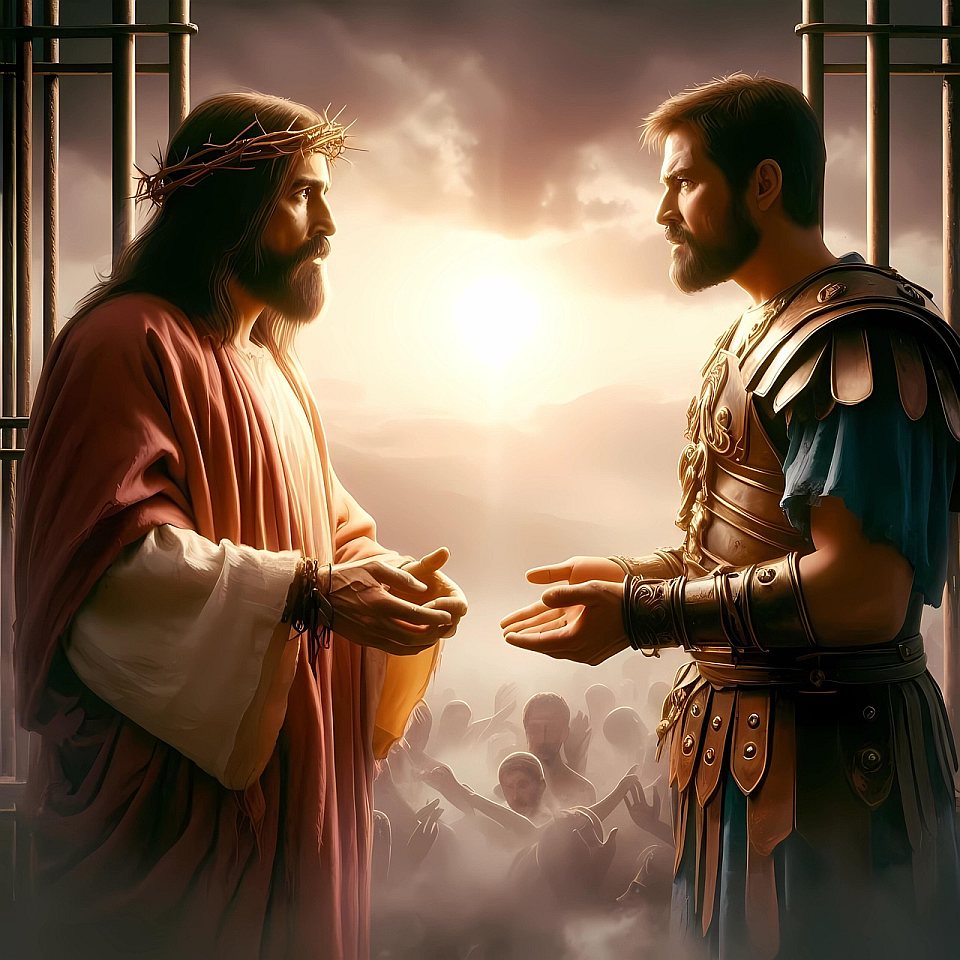
Jesus before Pilate
Then Pilate entered the praetorium again, summoned Jesus, and asked him, ‘Are you the King of the Jews?’ Jesus answered, ‘Do you ask this on your own, or did others tell you about me?’ Pilate replied, ‘I am not a Jew, am I? Your own nation and the chief priests have handed you over to me. What have you done?’ Jesus answered, ‘My kingdom is not from this world. If my kingdom were from this world, my followers would be fighting to keep me from being handed over to the Jews. But as it is, my kingdom is not from here.’ Pilate asked him, ‘So you are a king?’ Jesus answered, ‘You say that I am a king. For this I was born, and for this I came into the world, to testify to the truth. Everyone who belongs to the truth listens to my voice.’ Pilate asked him, ‘What is truth?’
John 18:33-38
Those of us who go to Church on Good Friday are likely to be familiar with this passage from the Passion according to John. Pilate’s Question - What is truth? - is sometimes lost in the midst of everything else, and of course, the Gospel does not provide Pilate with a neat answer either. At one level, the answer to the question is four chapters back.
Jesus said to him, “I am the way, and the truth, and the life. No one comes to the Father except through me.
John 14:6
Pilate, of course, did not have that information, and for him we can but wonder what the force of the question was as he uttered it.
If you read this passage, especially out loud, there is a question about how you read it. I have heard it read by a student with a real sense of genuine inquiry, and I have heard it read by a sanguine college professor who dropped it with an acid dose of cynicism. It can be read flat and simply dissolve into the text, or highlighted in ways that bring out various shades of meaning.
This led to the question - how did Pilate deliver the question?
Judea was a strategic but problematic appointment for the Roman Empire. While it had significant logistical advantages, it was also one of the most difficult provinces to govern, characterised by constant tension, religious conflict, and costly rebellions.
Judea was Pilate's last significant appointment in the Empire, ending his appointment after issues in Samaria (we today call it the West Bank) around 36-37 AD.
John presents the Jewish leaders as conspiring together to get Pilate to have Jesus put to death. There are several reasons why Pilate resists, including that no Roman Laws have been broken, that it is simply an internal Jewish issue, and that his wife suggests that he shouldn’t. However, the city is overflowing in preparation for the Passover, which falls on a Sabbath, and the three major power forces, the Priests, the Sadducees, and the Pharisees, so often divided, have found a common enemy in Jesus. To placate them and keep the peace, Pilate Consents.
The turning point of the decision seems to be expressed when Pilate exclaims, “What is Truth?” The decision is about expediency and political reality, and has nothing to do with truth. Pilate washes his hands.
And yet, to this very day, the question reverberates through time and again and again we are required to find an answer. AI will provide you with a basic answer.
Truth is defined as conformity to facts, reality, or actuality. It represents the accuracy of statements, beliefs, or propositions in relation to the world as it is. Common interpretations include correspondence with reality, internal consistency, and practical utility, serving as a standard for knowledge, honesty, and evidence-based claims.
https://en.wikipedia.org/wiki/Truth
Maybe such a definition helps, though I doubt that it would have helped Pilate, even if he had it at the time. There is a sense that many of us have that Truth should be both objective and absolute.
Pilate, as John presents him, abandons the pursuit of a higher good and gives way to the mob to resolve the short-term problem of the potential riot.
This same struggle confronts us today, again and again, sometimes more subtly and sometimes with less obvious consequences; it is really the same struggle.
We are confronted with information from an untold number of sources. Some of that information is true, and some of it is true in part, and some of it may be true but told in such a way as to elicit a response from you, some of it is half true and basically biased, and of course, some of it is simply false.
A phrase used by an American President emphasised this problem when he spoke about alternative truth. The phrase itself debases the notion of truth as objective and absolute, making it subjective and relative.
The idea that then can be an alternative to the truth that is also true is problematic, and yet we find people speaking about ‘my truth’. This suggests that there may be parallel truths about the one thing or event.
For us, as Australians, living in the 21st Century, some particular points about this may trouble us. Most of us whose schooling was in the last century were taught that James Cook discovered Australia in 1770. James Cook, who was an excellent seaman and ahead of his time in looking after his crew and their welfare, yet there are some really good questions about the discovery of Australia claim.
- Willem Janszoon (1606): Landed on the western side of Cape York Peninsula in the Duyfken.
- Luís Vaz de Torres (1606): A Spanish explorer who sailed through the strait now bearing his name (Torres Strait).
- Dirk Hartog (1616): Landed on Dirk Hartog Island off Shark Bay, Western Australia.
- Jan Carstensz (1623) explored the Gulf of Carpentaria and named it after the Governor-General of the Dutch East Indies
- Abel Tasman (1642 & 1644): Discovered Van Diemen's Land and mapped northern Australia, calling it New Holland.
- William Dampier (1688 & 1699): The first Englishman to land on the Australian coast.
- Willem de Vlamingh (1696-97): Dutch captain landed on Rottnest Island, and sailed up the Swan River and found Black Swans.
- Makassan Trepangers: Fishermen from Indonesia visited the northern coast (Kimberley/Arnhem Land) for centuries to trade
However, perhaps more than 50,000 years ago, as the evidence now suggests, Australia's first human inhabitants discovered Australia on foot, crossing the land bridge from Asia.
What James Cook did was map a significant part of the East Coast of Australia. Joseph Banks travelled with him on this journey and became a great advocate for the foundation of a colony in what became known as New South Wales.
Another thing we were taught in History was about the Settlement of Australia, which might be understood as the dispossession of the original Australians from their lands, hunting grounds and food sources.
One of the things that the First Australians are asking for is truth-telling. Our History, the songlines of our story that tell us who we are, has been managed in a very colonial, Anglo-friendly way, where the English are always the good people. If we look at the account from the perspective of the first Australians, we may see a different view as the settlers become invaders and the overlanders become thieves of country, food sources and hunting grounds.
For generations, we have ignored the frontier wars, where tribal groups joined forces to struggle against the colonialists. We did not learn about this in school, and many of us to this day have but a scant understanding of it. Today, there is a new struggle in the History Wars to talk about these things with greater honesty. If we are serious about reconciliation, or makarata, then we know this is a prerequisite for us to walk into the future together,
This, of course, leads us back to Pilate’s Question: What is Truth?!
The Woman at the Well
John
John’s Gospel is the 4th of the canonically authorised accounts of Jesus life and death. Whilst some scholars have argued for an early date, most see it written towards the end of the 1st century.
The Gospel of John is clearly different to the other 3 Gospels, and in several ways.
- John Starts Differently
- John Orders Things Differently
- John makes theology important
- John lacks a birth account *
- John lacks a Transfiguration story *
- John lacks an Institution Narrative *
*These things are part of the Gospel, but not in the way they are presented in the other three Gospels.
Samaritans
This is a sidetrack discussion so we may better understand some of the depth hiding in the 4th chapter of the 4th Gospel.
Geography
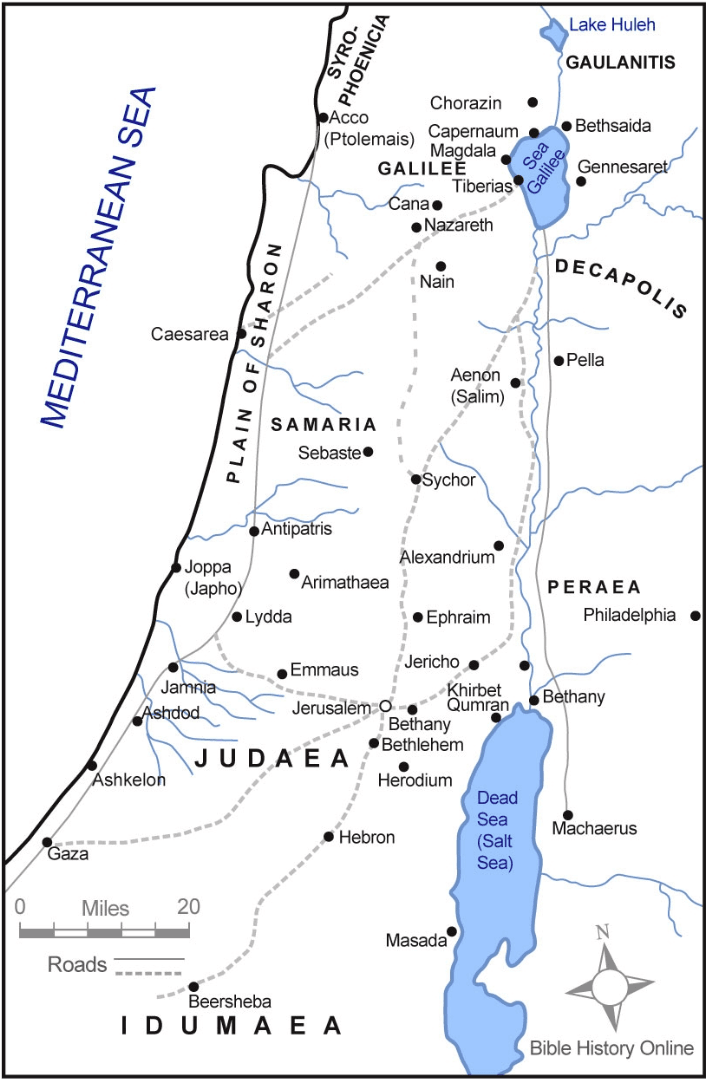
Israel essentially comprised Galilee and Judea, which meant that Samaria was sandwiched in between. To go to the Temple in Jerusalem from Israel, it was necessary to cross the Jordan into the Decapolis and travel ‘trans-jordan’ to avoid being ritually unclean and unable to attend the Temple. The journey back might be made through Samaritan country, as it was shorter.
Israel is about a third the size of Tasmania or twice the size of Greater Sydney. In the time of Jesus, the whole area was administered as a region of the Roman Empire, ruled by the Roman Governor and a Vassal King.
A Little History
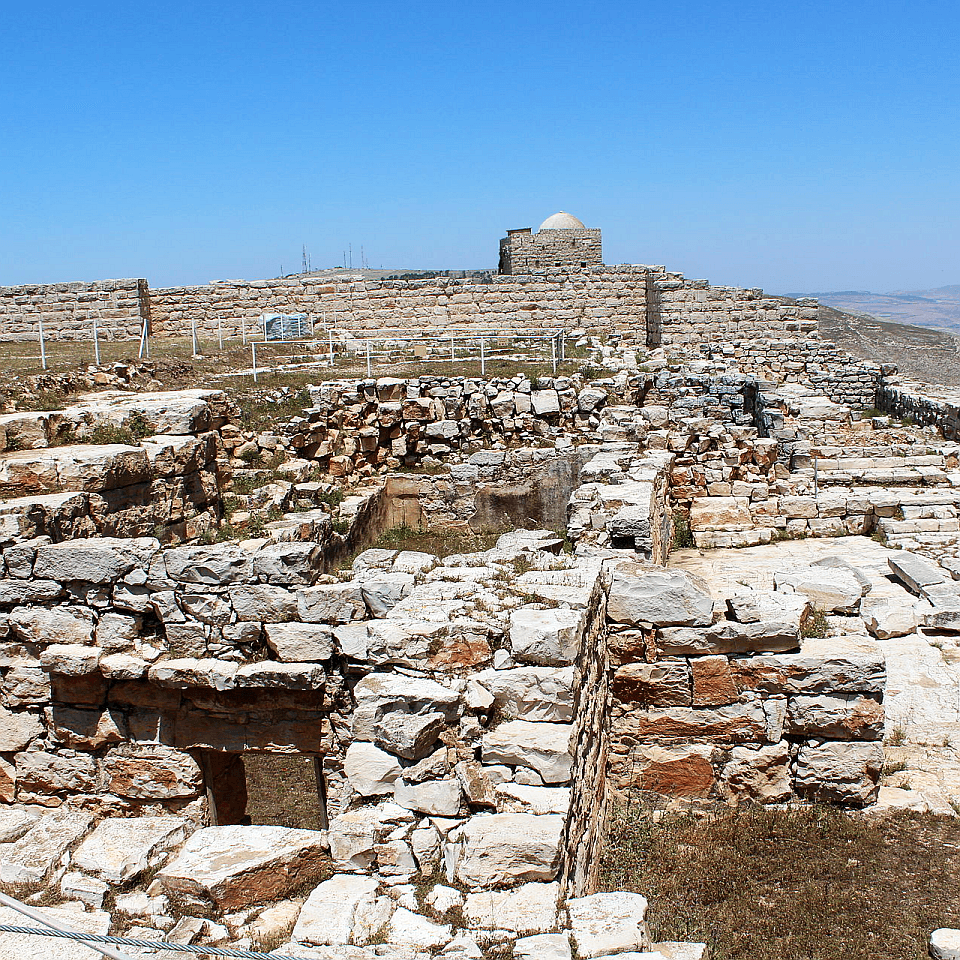
When Abraham came from Ur of the Chaldees and settled in the Holy Land, he first arrived near Shechem, Samaritan territory at the time of Jesus. From there, he travelled to Bethel north of Jerusalem, and finally further south to Hebron. Today we would understand it as part of the West Bank.
Jacob, Abraham’s grandson, found a well near Sychar, most probably Schecham. This was taken as a significant site by the people, the well famous for constant fresh water, and the area for the close association with Abraham and Jacob.
History moved on, the enslavement in Egypt, the return and the Exodus. Ultimately, David became King over Israel, and in a move of strategic wisdom, he united the Northern and Southern Kingdoms and moved the capital to Jerusalem (city of peace), and the new temple was built there.
The area was where Abraham, at one stage, had paid tribute to Melchizedek, King of Salem.
The Samaritans rejected the Temple, honouring the holy mountain and Jacob's well.
Scriptures
The Samaritans received as Scripture the five books we would call the Torah, namely Genesis, Exodus, Leviticus, Numbers and Deuteronomy.
They do not accept the idea of Kings, and the prophetic books were outside their realm.
The schism between Jews and Samaritans falls somewhere between 1400 and 1000bc. Some early Samaritan records suggest it was about offering sacrifices without salt.
Like all groups that are historically close, the differences run very deep, and the chasm can be very hard to cross. We know this in the historic divisions of the Christian Church, between East and West, between Catholics and Protestants, and in all manner of ways we find to divide.
The Jews and the Samaritans in Jesus' day had a historic distaste for each other. Even today, Samaritans have a stand-alone religious status in Israel, though conversions happen, often in terms of matrimony.
This is a Long Narrative
In terms of the 4th Gospel, this is probably the longest narrative. Much of the theological reflection is built into the narrative in this account. The linking passage is the theological reflection at the end of Chapter 3 under the title - The one who comes from Heaven.
This passage is often referred to as The Woman at the Well. Whilst that is OK, in a way misses a great deal of one point that John wants to make here. It is critical to this story that she is a Samaritan Woman; otherwise, the story does not make sense.
One of the important questions in understanding the shock value of the story is to understand why, in the heat of the day, a woman would come to the well on her own.
Back to Galilee
When Jesus learned that the Pharisees had heard, ‘Jesus is making and baptising more disciples than John, ’ Jesus left Judea and started back to Galilee.
It seems that Jesus and the team of disciples have come to the notice of the Jewish authorities, and he makes the decision to return to Galilee.
It was not Jesus himself but his disciples who baptised. This point of clarification is added by John to the narrative, which was not made earlier in the story.
Sychar and the Well
Jesus had to go through Samaria. So he came to a Samaritan city called Sychar, near the plot of ground that Jacob had given to his son Joseph. Jacob’s well was there, and Jesus, tired out by his journey, was sitting by the well. It was about noon.
The necessity to go through Samaria is not evident, but presumably, if they had got to Sychar, they had been walking for several hours, and Jesus sat down by the well.
Now, the well here has history, and a lot of it, as this was Jacob’s Well, and represents a good part of the Samaritan argument with the Jews.
So far, the story is fairly ordinary: a long walk, a bit tired, it’s the middle of the day, and Jesus sits down by the well.
Give me a drink
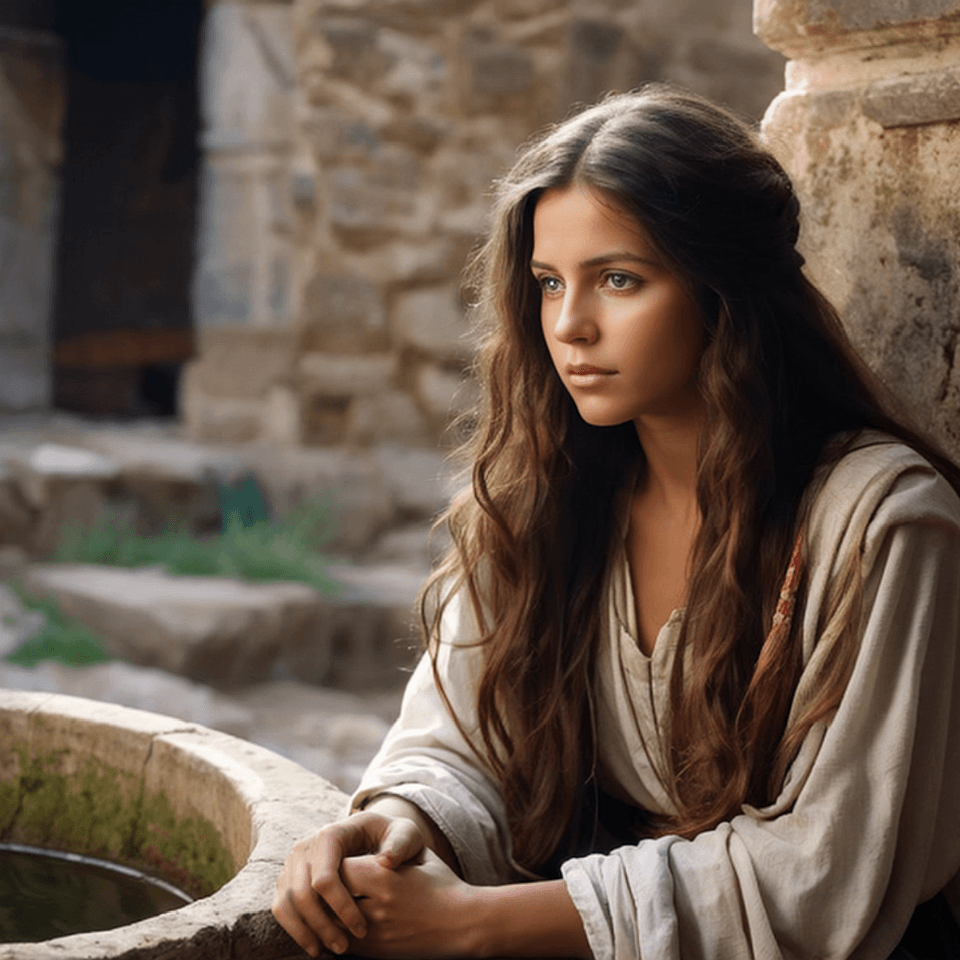
A Samaritan woman came to draw water, and Jesus said to her, ‘Give me a drink’. (His disciples had gone to the city to buy food.)
Whilst it makes sense that Jesus was there in the middle of the day, given the journey, it makes less sense that the Samaritan Woman had come out by herself to draw water in the middle of the day, rather than in the cool of the morning with the other women. The reason for that will become apparent later.
So Jesus asks the woman for a drink. And we then have the scene completed with the disciples not being there as they have gone off to get food.
Of course, what is shocking in this setting is that Jesus the Jew has spoken to the Woman of Samaria at all, and that he has done so without a chaperone.
In the mind of the Jew and of the Upstanding Samaritan of the day, this has scandal written all over it.
How is It that you, a Jew
The Samaritan woman said to him, ‘How is it that you, a Jew, ask a drink of me, a woman of Samaria?’ (Jews do not share things in common with Samaritans.)
So, in case you didn’t get the scandal, John now spells it out for us in the words of the Samaritan Woman.
The issue is, of course, that Jews do not share things in common with Samaritans.
Of course, that is not wholly true. They share a level of common scripture, and they share an allegiance to the God of Abraham, Isaac and Jacob (Israel).
It is like saying catholics and protestants have nothing in common, failing to recognise most of the scripture and the creeds that they share.

Living Water
If you knew the gift of God, and who it is that is saying to you, “Give me a drink”, you would have asked him, and he would have given you living water.
Now, of course, the discourse has taken a twist. The water in Jacob’s was famous for being fresh, cool and refreshing, moving, not stagnant, and in every practical sense, the water in the well was lively, life-giving, and in that sense living. So Jesus words here are at least a little open-ended.
This, of course, is a come-in spinner dialogue, in that it allows the conversation progress to the next point.
So we are about to shift from this simple business of being thirsty to much deeper things.
Bucketless
Sir, you have no bucket, and the well is deep. Where do you get that living water? Are you greater than our ancestor Jacob, who gave us the well, and with his sons and his flocks drank from it?
Jews and Samaritans would not share a drinking vessel; Jesus can’t drink from her bucket, and he does not have his own.
Are you greater than our ancestor Jacob? This question is both challenging and provocative.
The honouring of the ancestors and most especially the Patriarchs was common in the Middle East at the time, and really to this day.
The fact that this is Jacob’s well is really important, and heartland country for the Samaritans.
Not Thirsty again
Jesus said to her, ‘Everyone who drinks of this water will be thirsty again, but those who drink of the water that I will give them will never be thirsty. The water that I will give will become in them a spring of water gushing up to eternal life.’
On the one hand, this seems to answer the question that has been posed, and Jesus is effectively saying, ‘yes I am greater than our common ancestor Jacob’
It is important not to neglect that this whole passage flows from the discussion of Baptism in chapter 3, and at the beginning of this passage.
John is also beginning to move the conversation from the physical to the spiritual.
Misunderstood
The woman said to him, ‘Sir, give me this water, so that I may never be thirsty or have to keep coming here to draw water.’
Again, we find this fumbling for understanding, which has a real sense of humour buried deep within it, as John draws out the meaning of the passage.
Now, for us who can’t imagine a house without a tap, we can easily miss this. If every time we wanted a drink, we had to walk downtown, get a bottle of water and walk home to drink it. We might get the point. Before tanks, before running water, what the woman says makes a lot of sense, even though it appears she has completely missed the point.
Husbandless
Jesus said to her, ‘Go, call your husband, and come back.’ The woman answered him, ‘I have no husband.’
Whilst it is not exactly clear why this is the next step, the question is interesting. A woman alone in the heat of the day, going out to the well, suggests she did not want to go out with the others, or that her company was not wanted by the others.
Her husbandless state may well have been a reasonable deduction.
Yet perhaps this also builds on the point made at the close of chapter 2, that Jesus did not trust himself to anyone, for he knew what was in people.
Called Right Out
Jesus said to her, ‘You are right in saying, “I have no husband”; for you have had five husbands, and the one you have now is not your husband. What you said is true!’
It is not quite clear if the significant other is not married or married to someone else.
At this point, the issue is clearly that the woman was not expecting to be laid bare,
Prophet
‘Sir, I see that you are a prophet. Our ancestors worshipped on this mountain, but you say that the place where people must worship is in Jerusalem.’
Rather than dwell on that, the conversation moves immediately to the essence of the problem between the Jews and the Samaritans.
Where are we supposed to worship?
For both of them, the answer was obvious and did not need discussion; it is just that the answers were different.
The use of the term prophet here suggests that the person sees beyond the surface and understands things at a deeper level.
In a way, the woman might be beating a hasty retreat from a discussion about her domestic arrangements, or perhaps that is simply an artifact of the story, and not regarded as of great consequence.
On the other hand, she may be pointing to the question Who is Jesus for the Samaritan people.
Neither, Nor
Woman, believe me, the hour is coming when you will worship the Father neither on this mountain nor in Jerusalem. You worship what you do not know; we worship what we know, for salvation is from the Jews
The response from Jesus clearly cuts through the thousand years of dispute that have led to this point, answering neither one way nor the other, but rather opening to a new alternative that neither of them has seen.
The kick in the tail in the last clause, ‘Salvation is from the Jews’, really describes Jesus position in humanity, for he clearly has good Jewish credentials.
The point here is, however, that Salvation is not necessarily for the Jews, and certainly not for the Jews alone.
The historic notions of the tribal or national God are being dispensed with, and the covenant is being thrown open.
Spirit and Truth
The hour is coming, and is now here, when the true worshippers will worship the Father in spirit and truth, for the Father seeks such as these to worship him.
Expanding on this, Jesus argues that the time has come for true worship to be in spirit and in truth.
Not so much about the right sacrifice in the right place and at the right time, not a diligent execution of ritual, but rather honesty and integrity in the expression of the relationship with God.
Spirit:
The essence of our internal being, our true nature at its deepest level.
Truth:
Not simply the performance of rite and ritual, but an absolute integrity of being.
It is no longer about where we are physically that God is concerned about, but about where we are spiritually, which is of the essence of what God is looking for in us.
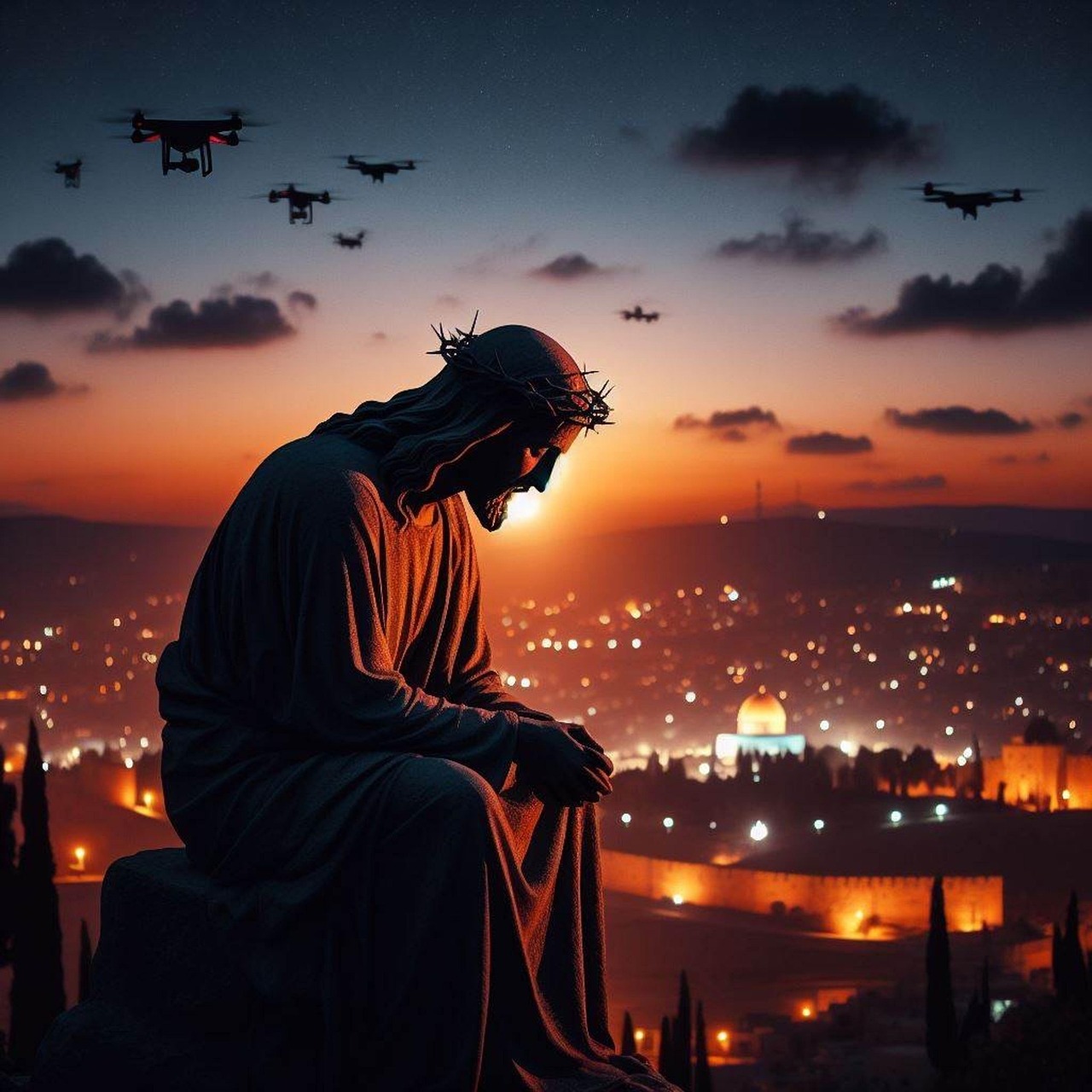
God is Spirit
God is spirit, and those who worship him must worship in spirit and truth.’
This view of God, that God is Spirit, is common ground for both Jews and Samaritans. This indeed is a fundamental truth for both of them.
The conclusion that Jesus draws from this for us is that those who worship him must worship in spirit and truth.
Jesus calls us to worship God with fundamental integrity from the source of our being.
This fundamental truth in Scripture is often missed by those who want to paint God as ‘the old man in the sky’.
I am he
I know that Messiah is coming. When he comes, he will proclaim all things to us.
Jesus said to her, ‘I am he, the one who is speaking to you.’
As a Samaritan Woman, her expectation that the Messiah would proclaim all things is entirely consistent with Samaritan expectations.
The question, of course, remains whether she envisaged including the earlier discussion of her domestic arrangements.
Jesus says very simply, ‘I am he’.
No great fanfare, no crowd, here to a Samaritan Woman, Jesus simply declares, I am the one you are waiting for, I am the Messiah, in three simple words, I am he.
To Nicodemus, a leader of the Jews, there was no such declaration, but here to a Samaritan woman, we have the simple and clear declaration.
The Disciples Return
Just then, his disciples came. They were astonished that he was speaking with a woman, but no one said, ‘What do you want?’ or, ‘Why are you speaking with her?’
The disciples are now brought back to the narrative, having returned from town, and we are told they were astonished. In reality, it would have been thought that they would have nothing to talk about, and indeed it was probably improper that he was speaking with her without someone else being present, and that most normally would have been her husband (?).
The disciples, despite their astonishment, clearly take this wiser course and keep their own counsel.
Water Jar
Then the woman left her water-jar and went back to the city.
This small detail in John’s Gospel is immensely important from the Samaritan point of view, for John has painted the scene so that the Restorer has appeared with the water jar beside him. This accords with the Samaritan expectation and is essentially meaningless to the Jews.
This tells us that this passage is written with the Samaritan reader/hearer in mind.
In the Nicodemus account, we were asked to see Jesus as the fulfilment of Jewish expectation, and here we see Jesus as the fulfilment of Samaritan expectation.
Side-note: Water has been a big thing here, from John the Baptist, baptising, to Nicodemus with being born of water and Spirit, and not here, where Jesus offers living water beside Jacob’s well and the Samaritan Woman leaves her water jar.
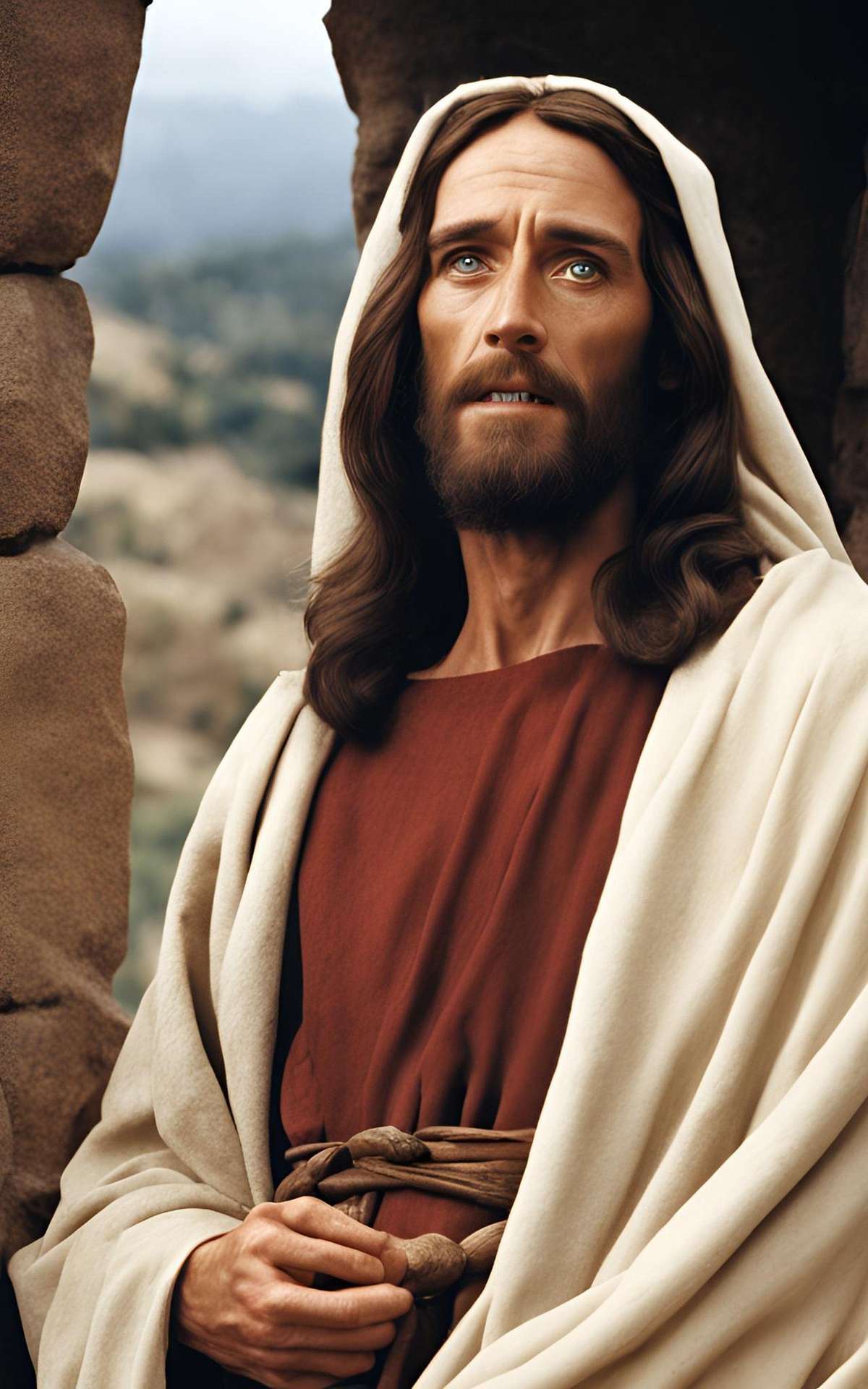
Come and See
‘Come see a man who told me everything I have ever done! He cannot be the Messiah, can he?’ They left the city and were on their way to him.
We must presume that we do not have all the conversation, for all we know about is five husbands and a spare, and we would imagine there was more to her life than that.
Nonetheless, as a result of what she says, people leave the city on their way to meet him.
This mirrors what we heard about in Chapter One with the assembling of the apostolic band. Andrew found his brother Simon Peter, Philip found Nathaniel, and the woman found the people in the village. The words consistently are come and see.
So the encounter with Jesus seems to generate the desire that other people should have the opportunity to meet him as well. There are no long conversations, there is no argument; all we have is the invitation to come and see. This seems to be evangelism in the 4th Gospel.
Food
The disciples were urging him, ‘Rabbi, eat.’ He said to them, ‘I have food to eat you do not know about.’ The disciples said, ‘Surely no one has given him something to eat?’
So we were told earlier that the disciples had ducked into town to get some food. The immediate response from Jesus is that he has food to eat which they do not know about.
We have a classic Johannine misunderstanding where Jesus says something spiritual, and it is assumed at the temporal and physical level.
This, of course, is the exact match to the woman mistaking living water for the water in the well.
This theme will be more than a little expanded in chapter 6.
‘My food is to do the will of him who sent me and to complete his work.
And now we see again that John has juxtaposed spiritual and physical food in the way he has been playing with these concepts for some time in the Gospel.
Ripe Fields
Do you not say, “Four months more, then comes the harvest”? But I tell you, look around you, and see how the fields are ripe for harvesting.
And no, we have a change of tack again, with a dual message between the spiritual and the physical: the harvest is four months away, suggesting a time in early to mid-winter, and then the issue that it is, in fact, already harvest time.
This passage may seem somewhat unrelated to the story of the Woman at the Well. When you see it as the Samaritan Woman, however, it becomes a passage about the Samaritans and evangelism.
This seems quite different to Matthew 10.5: ‘Go nowhere among the Gentiles, and enter no town of the Samaritans.
Sower and Reaper
The reaper is already receiving wages and is gathering fruit for eternal life, so that sower and reaper may rejoice together.
This reflection is a powerful consideration about the evangelistic work of the Church.
The history and tradition of the Samaritan people have laid the foundation on which they might now receive the good news. Those who harvest may well rejoice; it is not simply their work, it is also the work of those who have laboured before.
The sower and the reaper are called to rejoice together. One person’s work is not more important than another's. It is a team effort.
For here the saying holds, “One sows and another reaps.” I sent you to reap that for which you did not labour. Others have laboured, and you have entered into their labour.’
We have heard for ourselves
Many Samaritans from that city believed in him because of the woman’s testimony, ‘He told me everything I have ever done.’ So when the Samaritans came to him, they asked him to stay with them; and he stayed there for two days. And many more believed because of his word. They said to the woman, ‘It is no longer because of what you said that we believe, for we have heard for ourselves, and we know that this is truly the Saviour of the world.’
In some way, this may seem a little harsh on the woman; the point of the text is the encounter each has with Jesus in their own right. They have come and seen and heard, so now they know.
Saviour of the
The traditional rendering of the text at the end of this passage is The Saviour of the World.
In some ways, that is a safe translation; the Greek 'o sooteer tou kosmou' could also be translated as " The Saviour of the Cosmos".
The point is that the question John is addressing for the whole of the Gospel, ‘Who is Jesus’ or Christology, has now been blown open, not simply the Jewish Messiah, but also the Samaritan Messiah, and indeed everyone’s Messiah.
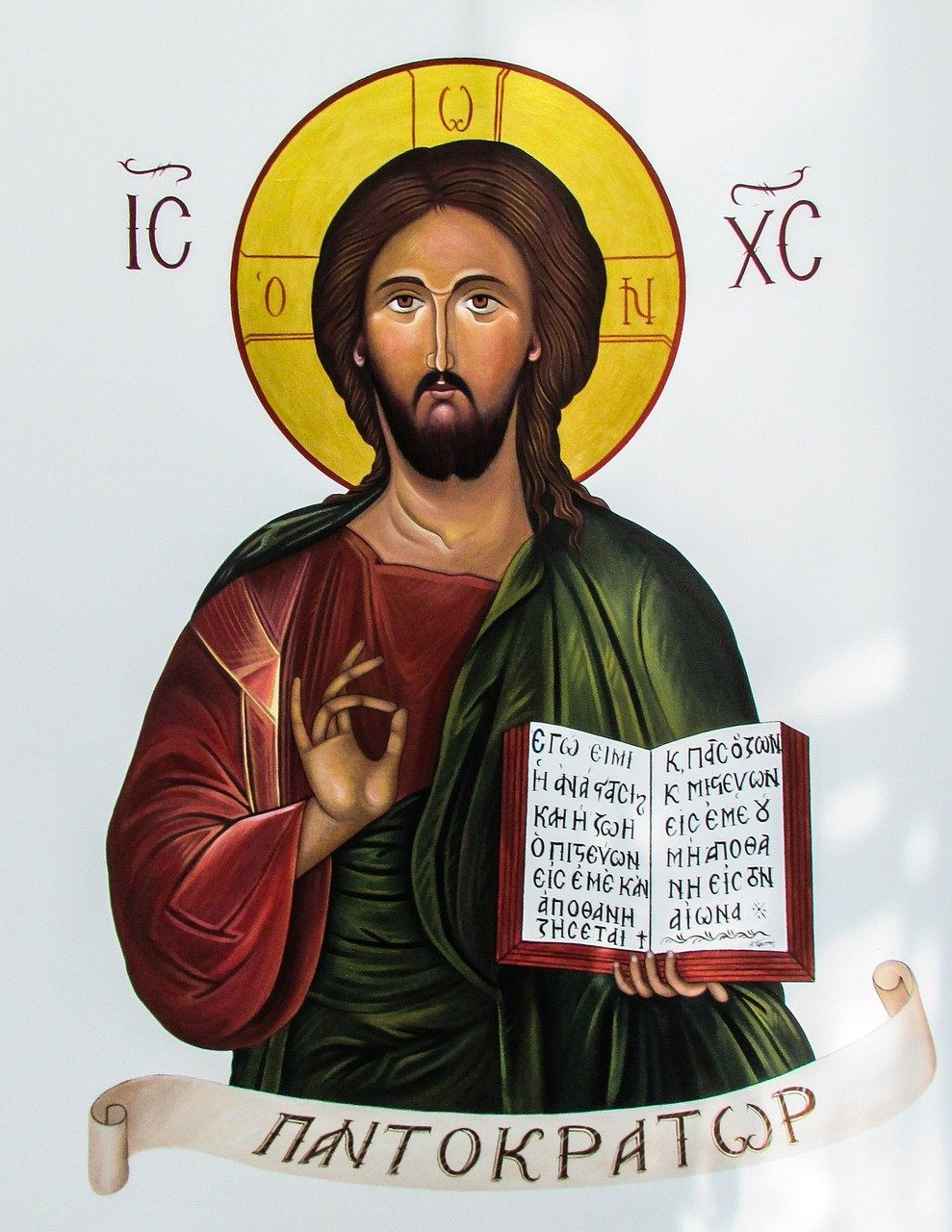
Lent – Holiday
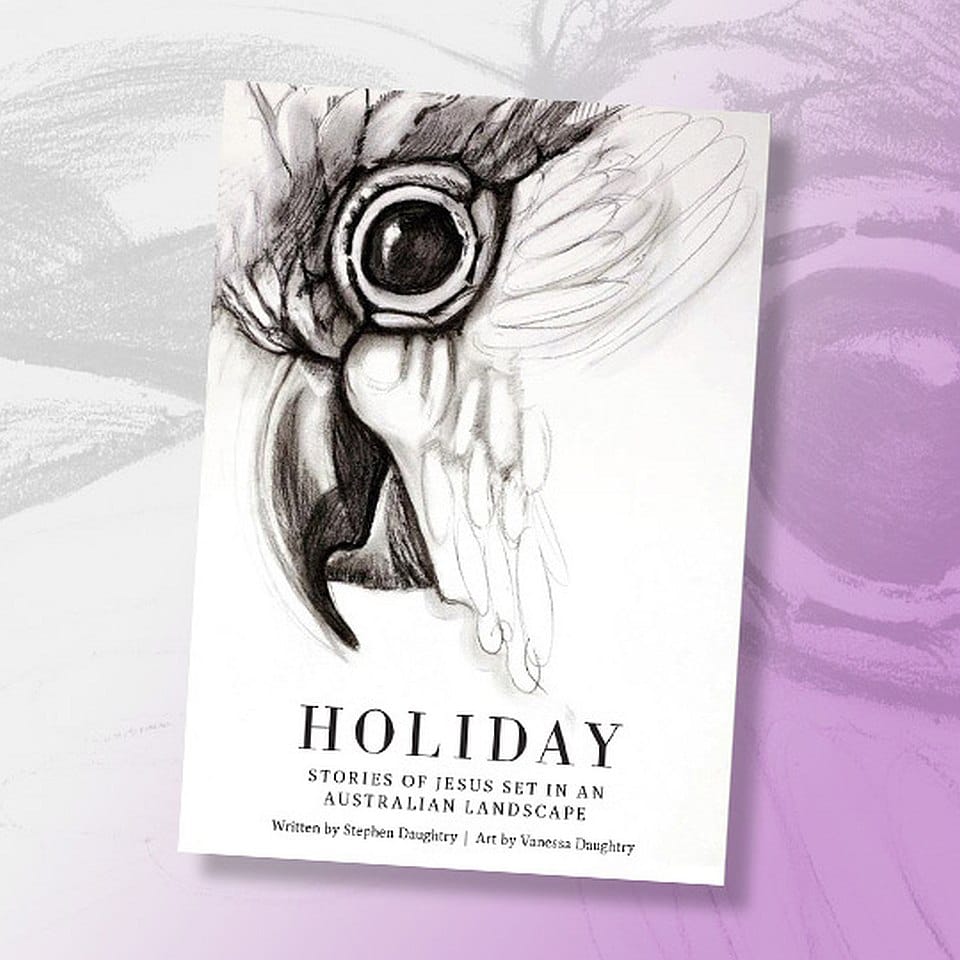
2026 Lent Study
Our 2026 Lent studies will use the book from ABM by Steve & Vanessa Daughtry called HOLIDAY.
You can order a copy from any of the centres for $12.00
HOLIDAY
ABM’s brilliant new story/study book for Lent 2026 – or anytime! Gospel stories reimagined in an Australian landscape.
From Steve and Vanessa Daughtry, author and illustrator of ABM’s wildly successful Advent (or anytime) Study, CARAVAN, comes a brand new book, HOLIDAY.
Stories from the adult ministry of Jesus, starting with his baptism by John and finishing at the Resurrection, HOLIDAY imagines the Gospel stories set in a contemporary, Australian landscape.
HOLIDAY opens a door on new and refreshing ways to encounter Jesus. Concentrating on the people whose lives Jesus touched, the stories invite us to imagine ourselves in the scene.
Not just another bland Bible Study, HOLIDAY is a book of powerful stories that you and your faith community will laugh, cry, wrangle and wrestle with.
Here’s what one Aussie Biblical scholar has to say about HOLIDAY.
“In HOLIDAY Stephen Daughtry invites us in to encounter Jesus anew, by retelling key moments of Jesus’s adult ministry from the perspective of ordinary people in contemporary Australia. The stories are gritty; at times I tasted the dust in my mouth and felt the pain of broken relationships. These stories are also of love and faithfulness, with gentle and true transformation in the lives of ordinary people.
I appreciated the deep respect for First Nations people and ways of knowing embedded into these stories, and the keen observational eye of each narrator as they tell their story in a voice that is unmistakeable Australian. What CARAVAN provided for the Advent to Epiphany season with stories of Jesus’ birth and childhood, HOLIDAY offers for the Lent season with stories of Jesus as an adult and the ongoing impact of what an encounter with Jesus may mean.
I highly recommend reading or listening to HOLIDAY in Lent and Easter as we journey with Jesus through key moments of his ministry to the cross and resurrection – and glimpse the transformation in the lives of those who encounter Christ as we hear these stories.”
Reverend Dr Ruth Mathieson, Executive Director & Principal, St Francis College, Brisbane. PhD (Charles Sturt), MTh (Charles Sturt), B.Th. (Hons) (Flinders), DipPS (ACD), Grad Dip Ed (SACAE), BSc (Hons) (Adelaide)
New Service Program
From 1 November 2025
We will trial a New Service Program from November 1, 2025, for the next few months. As The Rev'd Alison Wooden retires at the end of November, these changes are required to ensure that we have a service program that can be maintained.
Especially for people worshipping in Windale and Swansea, a new feature has been added to the top left of the website's home page, allowing you to view the schedule for each centre.
In brief, the changes are:
Windale:
Sunday Weekly at 8:00 am, alternating between Morning Prayer and Holy Eucharist. (That is a shift 3o-minutes earlier than previously)
Belmont:
Sunday Weekly at 9:30 am, Holy Eucharist. (That is a shift 3o-minutes later than previously)
Wednesday Weekly at 10.00 am, Holy Eucharist. (No Change)
Swansea: Sunday Fortnightly at 11:00 am, Holy Eucharist. (That is a shift 3o-minutes later than previously)
Thursday Weekly at 10.00 am, Holy Eucharist (That is a shift of one day earlier and 1/2 hour later)
NB: Especially for Swansea and Windale people. If you would like to download an app for the website to your smartphone to make it easy to check, please feel free. If you would like some help with that, please ask. As Sundays are a rolling fortnights, it should also coincide with the council bin collection for either Red or Yellow bins, so that may be another way of keeping tabs on it.
Psalm 139
Psalm 139
O Lord, you have searched me and known me.
O Lord, you have searched me and known me.
You know when I sit down and when I rise up;
you discern my thoughts from far away.You search out my path and my lying down,
and are acquainted with all my ways.Even before a word is on my tongue,
O Lord, you know it completely.You hem me in, behind and before,
and lay your hand upon me.Such knowledge is too wonderful for me;
it is so high that I cannot attain it.Where can I go from your spirit?
Or where can I flee from your presence?If I ascend to heaven, you are there;
if I make my bed in Sheol, you are there.If I take the wings of the morning
and settle at the farthest limits of the sea,even there your hand shall lead me,
and your right hand shall hold me fast.If I say, ‘Surely the darkness shall cover me,
and the light around me become night’,even the darkness is not dark to you;
the night is as bright as the day,
for darkness is as light to you.For it was you who formed my inward parts;
you knit me together in my mother’s womb.I praise you, for I am fearfully and wonderfully made.
Wonderful are your works;
that I know very well.My frame was not hidden from you,
when I was being made in secret,
intricately woven in the depths of the earth.Your eyes beheld my unformed substance.
In your book were written
all the days that were formed for me,
when none of them as yet existed.How weighty to me are your thoughts, O God!
How vast is the sum of them!I try to count them—they are more than the sand;
I come to the end—I am still with you.O that you would kill the wicked, O God,
and that the bloodthirsty would depart from me—those who speak of you maliciously,
and lift themselves up against you for evil!Do I not hate those who hate you, O Lord?
And do I not loathe those who rise up against you?I hate them with perfect hatred;
I count them my enemies.Search me, O God, and know my heart;
test me and know my thoughts.See if there is any wicked way in me,
and lead me in the way everlasting.
How Stuff Works

How Stuff Works?
A little while ago, in a discussion, someone mentioned how they had not been interested in History at school. They went on to explain that they had wanted to know “How Stuff Works?” and felt that Engineering was how to explain “How Stuff Works?”
Perhaps it is the abiding legacy of my Ancient History Teacher that shaped my views on this, for he taught me that the purpose of History was to explain “How Stuff Works?” Whilst those who do not study History are doomed to repeat it, those who do study History are forced to watch.
Many of our Politicians are graduates in Law or Economics. These disciplines are also, in their areas, concerned with understanding “How Stuff Works?” It was John F Kennedy who is reported to have said that we need not more Politicians, but more Poets.
When you think about it, just about every endeavour of study, fundamentally in some way, is concerned with “How Stuff Works?”
The 20th Century was a time when more emphasis was placed on Science than the arts; yet, interestingly, this is not reflected in our Politicians, only two of whom hold a degree in Science.
Of course, the division between Science and Arts is relatively shallow and not ancient. Theology, for a long time, was regarded as “The Queen of the Sciences”. Part of the reason for that is that there has been a shift in the meaning of the word Science. It used to mean the pursuit of knowledge in any sphere; however, in contemporary usage, it refers to a systematic study of the structure and behaviour of the physical and natural world through observation, experimentation, and testing theories against the evidence.
We might reasonably summarise that by saying Science seeks to understand “How Stuff Works”? In the post-Enlightenment period, there has been a tendency to address this search from the starting point of what exists, often called existentialism. Despite the many existentialist theologians, a mindset in society has developed that equates existentialism with atheism, which is simply not true.
Etymology, the study of origins, is one point where there are difficulties. The Big Bang Theory is a theory, and may indeed be the best answer that science has at the moment. Many people who believe in God, theists, accept the Big Bang Theory, and many Christians do; however, some robustly reject it because there is no Biblical Evidence to support it.
Anselm, Archbishop of Canterbury 1093-1109, argued in his book Cur Deus Homo (Why God Became Man) that Science and Faith/Theology pursued with Integrity will ultimately reach the same conclusion.
Interestingly, Theology, when looked at honestly, is also in the business of understanding “How Stuff Works?” How God works in and for creation, how God relates to us in word and sacrament, and how we encounter God in the natural world and the community.
Many in our world want to reject mystery, whilst people of faith want to embrace it. The Eastern Orthodox don’t speak of mystery very much; they prefer the term ineffable - that which cannot be told, the things that have no words.
Mystery is not just a label to cover the things we can not explain, but rather a recognition that there is more than we can simply describe. There is more to life than meets the eye. St Augustine declared, ‘I found God only to find that he had found me’. Our relationship with God is both life-affirming and centres us. We are not better than those who don’t go to Church, we are not loved more that those who don’t go to Church, however, we are grateful that we are loved.
Kintsugi
And I heard a loud voice from the throne saying, “Behold, the dwelling place of God is with man. He will dwell with them, and they will be his people, and God himself will be with them as their God. He will wipe away every tear from their eyes, and death shall be no more, neither shall there be mourning, nor crying, nor pain anymore, for the former things have passed away.” And he who was seated on the throne said, “Behold, I am making all things new.” Revelation 21:3-5
They say that a picture is worth a thousand words, and therein lies part of the beauty of The Book of Revelation. It is written in picture language for us, and we are given a rich and enchanting invitation to play with and enjoy the symbolism behind the images.
For example, the image of a breathtakingly beautiful bride is something and someone that is so exquisite and spectacular that words fail dismally when they try to capture the sight. You have to see it to believe it, to begin to understand. It's an experience, not a mathematical equation. This is what John is trying to begin to pass on to his readers when he writes
‘I saw the Holy City, the new Jerusalem, coming down out of heaven from God, prepared as a bride beautifully dressed for her husband.’
Within this reading, there is a quirk that is very important to understand, and the quirk is this.
In verse five, we get ‘Behold, I am making all things new’
Even though the passage says that Jesus is making all things new, most often this is misread as Jesus is making all new things. It may just seem like a semantic blunder. The meaning that is carried by each of those two phrases is vastly different.
We believe in a God who takes what is broken, pours his grace out upon it, and transforms it.
We believe in a God who was crucified, was dead, and was buried. But after three days, he rose out of the tomb. The same body that was dead and buried was given new life, and this restored and renewed body still had the scars as proof of the cross.
Our God doesn’t destroy things and replace them with new, different things. Our God takes things that are dead and transforms them into vibrant, living things that give him all the honour and glory and praise. He takes people who have absolutely no hope, embraces them, and rewrites their story for them. He takes the broken vessels and breathes new life into them, making them irreplaceable instruments for the work of the kingdom. Our God doesn’t make all new and different things. He makes all the old things new.
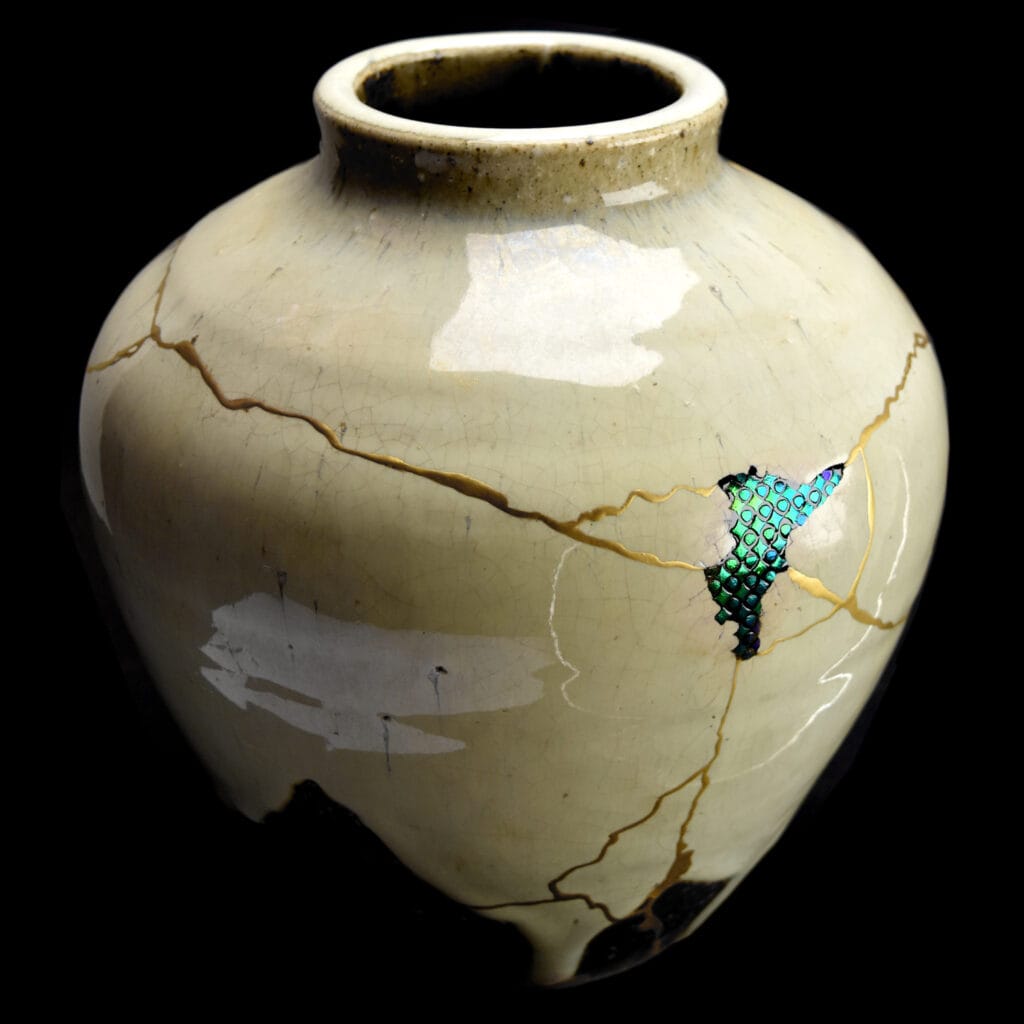
Now, the best example is something I have used before, but it is the best illustration I can think of. There is a tea infusion cup that was given to me by someone special. This cup was and is special because it was a gift. Alas, I broke the handle, and the kind giver person did a clever thing and mended it for me, but they did it in a very special way.
They did it using the Japanese art of Kintsugi, meaning "golden joinery”. This is the practice of repairing broken pottery or ceramics with gold or silver, actually highlighting the cracks and imperfections as a testament to the object's history and beauty. Behind this craft is a philosophy of embracing imperfection and finding strength in the scars of life.
Kintsugi challenges the idea that broken things are useless or ugly. Instead, it celebrates the cracks and flaws as a unique part of an object's story and character.
And I think that another way of explaining Kintsugi is to simply say ‘Behold I am making all things new.’
There is also another really important dynamic going on here.
Would it be a mortal, unforgivable sin if instead of hiding our scars and brokenness in our deepest darkest place, we actually allowed The Master to pour his golden loving grace upon our brokenness and we allowed him to heal us so that the busted unsightly bits of us, actually become our most precious and luscious and celebrated bits. That would have to be a wonderful thing.
One last thing on a personal note. I often reflect that as I place the broken bread into your hands, it is his brokenness meeting and healing your brokenness; and let’s be honest, we are all broken in some way, somewhere, somehow. Remember it is the piercings, the unlovely, brutal bits that The Risen Master shows off to his disciples. His brokenness is healing the brokenness of their fear and joy.
When we might think that we are useless, we should celebrate our cracks and flaws. They are a unique part of our story and character. Embrace the imperfection and find strength in our scars. Behold, I make all things new. Even you… even me.
With thanks to Fr David Oulton for permission to reproduce this story.
Be Still and Know
Be Still and know that I am God
Psalm 46:10
O Lord, you have searched me out and known me :
you know when I sit or when I stand,
you comprehend my thoughts long before.You discern my path and the places where I rest :
you are acquainted with all my ways.You have encompassed me behind and before :
and have laid your hand upon me.Such knowledge is too wonderful for me :
so high that I cannot endure it.Where shall I go from your spirit :
or where shall I flee from your presence?May the grace of
the Lord Jesus Christ,
the love of God, and
the fellowship of the Holy Spirit
be with us, now and forever ... Amen2 Corinthians 13:13
East Lake Macquarie Anglican Church.
Welcoming All as friends.
The Parish of East Lake Macquarie welcomes you to our website and we invite you to join us at our services, activities, and events.
Sharing a Vision.
Our vision is to be a united group of welcoming Christian people, celebrating and sharing our faith with joy, respect, and care.
Walking Together.
We are gently moving forward together to embrace new possibilities in an ever-changing world.
Using social media allows us to reach out and further share our faith, extending the hand of Christ in new ways.
This is a lively, vibrant Parish and there is always something happening across our three centres. There are regular Services held in Belmont, Windale, and Swansea as well as some of the local aged care homes. We are grateful to a large group of dedicated volunteers who share their energy and time in a variety of ways. East Lake Macquarie Anglican Church has three great Op Shops in Redhead, Belmont North, and Windale which are all well-supported and play an important role in the local community. In addition, we also have the Merrigum Centre operating out of our Windale centre, putting God’s love into action and providing food assistance to those in need every Wednesday morning as well as social interaction and friendship.
Celebrating Special Occasions:
Baptisms and Weddings are special occasions and wonderful celebrations, so we take great joy in being part of these celebrations. I encourage you to talk to us about times, dates, and ways that we can work together to make your event special and individual. Life also brings a range of challenges, hurt and loss, we hope to provide a place where everyone can feel supported and cared for.
If the website does not offer the information, you are looking for, please contact us via the contact page or phone us to arrange a time for a chat.
Blessings!
Fr Peter
Parish Priest.
Anglican Parish of East Lake Macquarie.
“Peace be to you, and peace be to your house, and peace be to all that you have”.
1 Samuel 25:6
The Tongues of Mortals and of Angels

Luke 6:39-49 is the last section of what is referred to as ‘the Sermon on the Plain’ (as opposed to the Sermon on the Mount). Jesus was teaching his followers what it meant to be disciples. He had begun with the four blessings and 4 corresponding woes. Last week we heard that we are to love our enemies and seek good for them; and that we should forgive and not judge others.
This brings us to today’s reading, beginning with specific teaching on being a disciple ‘Can a blind person guide a blind person’ – we can’t offer others what we don’t have; we need guides and mentors. ‘A disciple is not above the teacher, but everyone who is fully qualified will be like the teacher.’ If you follow the counsel of your teacher (or guide), you may also become like your teacher.
[David Lose, Luke 6:39-42 | ...In the Meantime]
“Why do you see the speck in your neighbour’s eye, but do not notice the log in your own eye?”
[Luke 6.41]
I am reminded of that song, ‘O Lord it’s hard to be humble when you’re perfect in every way!’
[ Mac Davis, Oh Lord It’s Hard to be Humble, 1980]
This is a continuation of what Jesus said about judging others. We seem to find it easy to notice other people’s faults and hard to acknowledge our own. Some people believe that what annoys us in someone is a trait or aspect of ourselves that we deny. That may be true in some circumstances, but probably not all. Either way, if we are blind to our faults, and focus too much on another person’s perceived faults, are we really reflecting God’s unconditional love in our relationship with them? The pit we might find ourselves falling into could very well be hypocrisy!
Jesus then moved on to speak about fruit, the things we do and say, and how we treat people. Matthew included a bit more information: ‘Beware of false prophets, who come to you in sheep’s clothing but inwardly are ravenous wolves. You will know them by their fruits.’
[Matthew 7.15-16]
We can read ‘false prophets’ as people claiming to be disciples or teachers. The ‘fruit’ that ‘good trees’, good disciples, produce are ‘the fruit of the Spirit: love, joy, peace, patience, kindness, generosity, faithfulness, gentleness, and self-control.’
[Galatians 5.22-23]
Jesus then went on to challenge his listeners, “Why do you call me ‘Lord, Lord’, and do not do what I tell you?” Anyone can call Jesus Lord, claim they’ve been converted or saved, but it’s by their ‘fruits’, by living as Jesus taught, that they actually declare him their Lord. So, what do all these teachings mean for us, especially as we prepare to begin our Lenten journey?
Recognising that it can be quite hard to identify or own up to our failings or weaknesses,
Lent encourages us to take some time to do this; to spend some time in self-reflection and think about what might be limiting our relationship with God. Do our lives reflect God’s love? Is there something more that we could be doing? And how are our relationships with others? Do we love our neighbours and our enemies as Jesus taught? Do we recognise that they are all created in God’s image?
Paul offered the early church several guidelines for this. My favourite is:
If I speak in the tongues of mortals and of angels, but do not have love, I am a noisy gong
or a clanging cymbal. And if I have prophetic powers, and understand all mysteries and all
knowledge, and if I have all faith, so as to remove mountains, but do not have love, I am
nothing. If I give away all my possessions, and if I hand over my body so that I may boast,
but do not have love, I gain nothing. Love is patient; love is kind; love is not envious or
boastful or arrogant or rude. It does not insist on its own way; it is not irritable or
resentful; it does not rejoice in wrongdoing, but rejoices in the truth. It bears all things,
believes all things, hopes all things, endures all things.
[1 Corinthians 13.1-8]
When Jesus spoke about good trees and bad trees, he did not say “once a bad tree, always a bad tree”. People can change, just look at how much Saul changed after his encounter with Jesus! Our passage from Isaiah is a great encouragement: ‘My word shall not return to me empty, but it shall accomplish that which I purpose, and succeed in the thing for which I sent it. Instead of the thorn shall come up the cypress; instead of the brier shall come up the myrtle.’
[Isaiah 55.11, 13]
This Wednesday, as you begin your journey through Lent to Jerusalem, perhaps you might reflect on where you need God's redeeming love: in your life; in your relationships; and in your community? And, where do you share God's redeeming love: in your relationships; and in your community?
Sermon, 8th Sunday after Epiphany
2nd March 2025
The Rev’d Alison Wooden
Hope 25

The Invitation of Phillip to Nathaniel
As Phillip invited Nathaniel to "come and see" Jesus in John 1:46, many have found their journey into the Christian faith begins with an invitation to church. Archbishop Temple famously wrote that inviting people to see Jesus is “the greatest service one person can do for another.”
So, you have a friend or loved one you would love to help in their spiritual journey? And you would like to invite them to a church service or activity but feel nervous or hesitant for some reason? You are not alone.
Practice inviting to anything
Practice inviting your friends to anything. Invite them to a meal, invite them to coffee, invite them to a concert. Reflect on how invitations are an act of love to share life together. An invitation is a gift that helps someone feel loved, even if they are not yet ready to accept. Inviting to a church activity is no different! Invitations require a depth of friendship and a willingness to include others in what is important to us.
Start your invitation with prayer
Well, not the actual invitation, that would be weird. But in considering who and when and
how to invite someone to church, ask the Lord for help. Pray for your friend. Ask him to give
you good words and help the person to respond positively. This will align you to God’s will
and remind you who is really doing the work here.
Be open about your church involvement and give general invitations.
General invitations are a great way to start. Let people know you’re a Christian and share which church you attend, offering an open invitation for them to join anytime. You might like to ask them if they have ever been to church before, and what it was like. Then the invitation becomes part of a conversation, and you may discover their picture of church is very different from yours. Talk with your friends about the roles you have in the church and how they enrich your life. If you use social media, consider sharing appropriate photos of church activities to give your friends a glimpse into this meaningful part of your life. Invite people to Christian activities that have a special value to you
Our friends are interested in what we are passionate about. This includes sharing what you love about the church service or activity you are inviting to.
For example:
- This service is always one of the highlights of my year.
- Last year when I was suffering I got so much comfort and strength from this group.
- I love the music in this service.
- This Christian course is one of the most helpful things I've done recently.
- I'm on the planning committee for this event, and I'd love you to see it.
When discussing, be ready to answer with key information
What details can you share that would be helpful to your friend? What is it like and what will happen there? What is the start time, and when does it end? Is there food? Will they have to give money? Is there a social aspect, and if so, is it optional? Is it safe to be an observer, or will I be expected to participate in some way (e.g., communion)? How many people will be there?
Can you share an online link to previous messages from the preacher so they can get a sense of the church?
Relationships before results
Pray for the person more than you pray for your invitation. The important thing is to be a Christ-like friend, rather than the performance of an invitation. Trust that God will prompt a receptiveness to invitations at the right time. Many people are 'hungry but hesitant' and will appreciate ongoing opportunities. It may help to find opportunities for your friend to meet other people from your church in other contexts. Compelling invitations are a team activity. Even when the response is indifferent or a clear rejection, your friend will sense your care in offering them a chance to engage with spiritual opportunities. Additionally, such moments can provide valuable insight into the reasons behind their hesitation.
Whilst not all of us are gifted evangelists, every believer can invite people to come and see.
Hope 25 Bible Study
The Parish will begin the Hope 25 Bible Study in Lent.
Thursdays in Lent at 2.00 pm at All Saints Belmont.
Thursdays in Lent at 7.30 pm by Zoom.
Epiphany
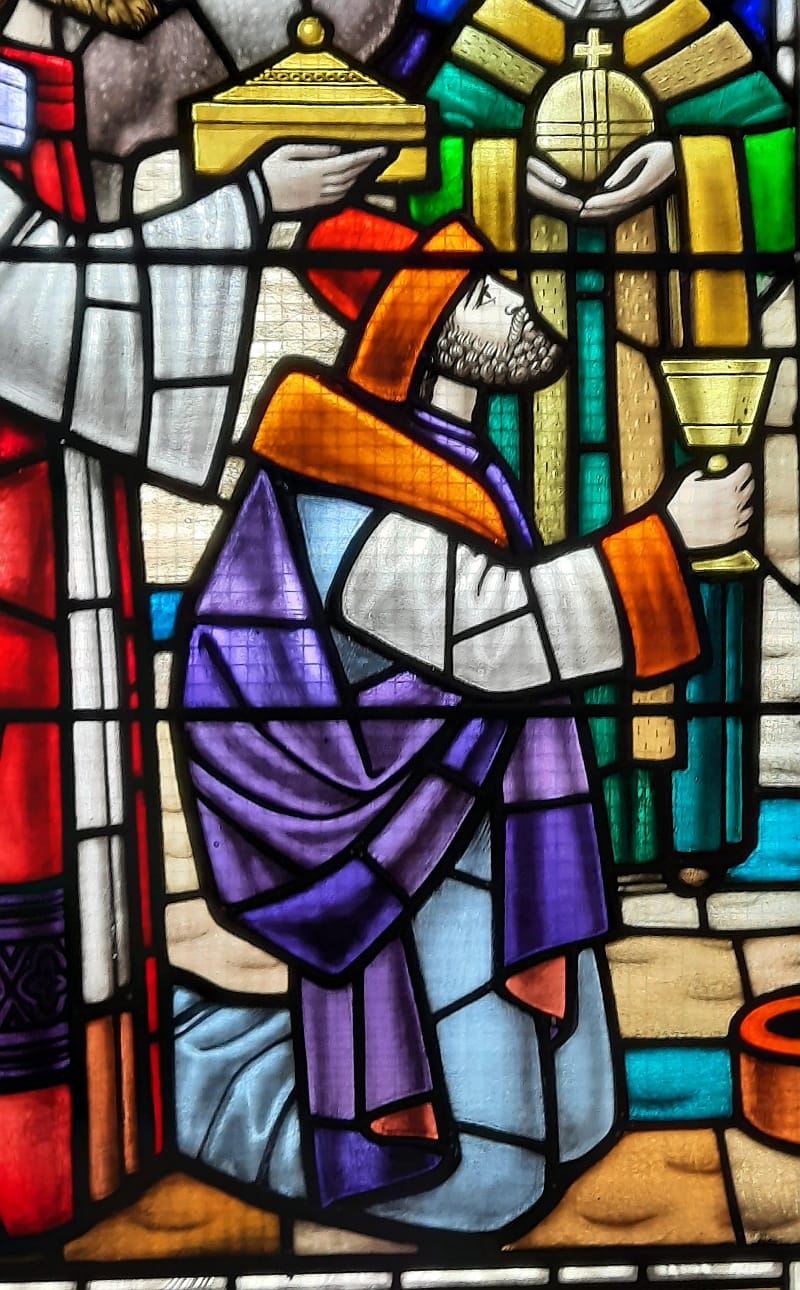
Today we celebrate Epiphany, the manifestation of Christ to the world. Epiphany has been celebrated since the third century. Originally, Jesus’ birth, baptism and the visit of the Magi were celebrated together on January 6, since they were all occasions of his manifestation to the world. However sometime in the third century, it was decided that the events were so special that they should be celebrated separately.
Today, for us, Epiphany celebrates the visit of the Magi, a small but significant incident in the life of Jesus and his family.
The night before Epiphany is known as Twelfth Night, as in Twelve Days of Christmas. At Epiphany, we remember the visit of the wise men. In some cultures, presents are exchanged at Epiphany rather than at Christmas because that’s when the wise men brought presents for the baby Jesus.
But why Epiphany? The term epiphany means "to show" or "to make known" or even "to reveal." In Christian terms, Epiphany is God’s self-revelation to the world. So, the visit of the magi is only one of many epiphanies recorded in the Bible. You could say that Moses had an epiphany when he encountered God in the burning bush, and Paul had an epiphany on the road to Damascus. The visit of the Magi is the first in our
season of Epiphany and over the next few weeks we will hear of other epiphanies in the Gospels.
But let’s get back to the visit of the wise men, the Magi, these men who appeared in Jerusalem looking for the baby born to be King of the Jews. Matthew doesn’t tell us their names or even how many wise men there were. Traditionally we say Three Wise Men because that’s how many gifts Matthew recorded them bringing and we assume that there was one gift from each man.
Have you ever wondered about the star and why no one else seemed to have noticed it? For me, that seems to be part of the irony of the story. Right back in the book of Numbers, Balaam prophesied that “a star shall come out of Jacob and a sceptre shall rise out of Israel.” [1]
But until these men from the East pointed out the existence of this star no one seems to have paid it any attention. Surely if it was clear enough for them to follow it was somehow different to the other stars in the sky.
Another irony in the story of the visit of the wise men is that Israel was chosen by God to be ‘a kingdom of Priests and a holy nation.’ [2]
They were the ones who were supposed to be showing the way to God, bringing other nations into a right relationship with God. And yet, here were these foreigners responding to God’s sign and showing the people of Israel, represented by King Herod, how to find the Messiah in the form of the baby Jesus.
Amazingly, King Herod believed the visitors and asked the chief priests and the scribes where the Messiah would be born. They were able to tell him, but they didn’t seem to have done anything themselves to check whether the Messiah had indeed been born.
There were three interesting groups of actors on the stage, weren’t there? The wise men who were open to the evidence of God’s working in and through creation and who willingly responded to God, even if they didn’t necessarily know which god; King Herod who actively resisted God’s will while publicly declaring his willingness to worship God; and the chief priests and the scribes who had all the necessary knowledge of God but who seem remarkably passive in this story. And then, of course, we have God who is in charge and who out-manoeuvres Herod.
Matthew used this story to set the scene for his account of the rest of Jesus’ life.
He told us that the wise men gave Jesus three gifts: gold, frankincense and myrrh.
Gold for a King, frankincense for a Priest, and myrrh for a dead body. And he showed that all of this happened through the actions of God. While Matthew had only just introduced the baby Jesus, his readers would have known a great deal about who Jesus was to become.
If all of this happened so long ago, why is it important to us? I believe that this story reminds us:
- That God is in control, even when events seem to indicate otherwise.
- The most unexpected people can point us to God, or help us see God’s spirit moving in ways and places that we hadn’t noticed
- We should remember that things are not always as they seem, but God sees and
knows all - As Christians, we are called to encourage others in their relationship with God
Christmas Services

Windale, 5.00 pm | Carols on the Lawn
Swansea, 9:30 am | Blue Christmas
5:30 pm Swansea| FamilyService
6:00 pm Windale | FamilyService
6:00 pm Belmont | Family Service
Windale, 9:00 am | Christmas Eucharist
Swansea, 9:00 am | Christmas Eucharist
Belmont, 9:00 am | Christmas Eucharist
All Souls

All Souls
Dear Brutus,
Thank you so very much for your letter which I received the other day. For a young man of just 6 years old, you certainly write terrific letters and I was jolly impressed. If I were your teacher I would give you a gold star, the day off school and a McDonald's voucher.
I was very sorry to hear about your grandfather dying. Understandably you are very sad about this and I shall do my best to answer some of the excellent questions that you have asked.
- The first question that I want to answer is… “Is it wrong to cry?” No, it is not wrong to cry. It is never wrong or sinful or wicked to cry. You may want to try to choose where and when you cry, but it is certainly not wrong to cry. It is a very helpful thing to shed a few tears and if you can do that with someone who cares about you, then you will find that while it is a painful and maybe an embarrassing thing, it can actually be a very special, empowering moment as you share this special time together. If you are in any doubt about my answer, remember that Jesus cried very loudly, like a big fluffy roaring lion, when his good buddy Lazarus died. People close by talked about it and said that it showed how much Jesus loved his friend. So if you feel that sadness welling up inside you then just go and get a big handful of tissues and have a jolly good sob.
In answer to your next question
- Why did the coffin get incense and holy water? These are gestures of farewell, a mark of respect for your grandfather. They are some of the finest symbols we can offer. The holy water reminds us that Baptism made your Pa a member of Christ and an heir to eternal life. The incense reminds us that the Holy Spirit made his body the temple of God’s glory to be raised up with Christ on the day of resurrection. I also like to think of the incense as our prayers rising up to heaven. You can’t actually touch prayers the same way you can touch this letter in your hand, but prayers are just as real as incense
- Why have a funeral when Grandpa is already dead? Good golly gosh Brutus, you ask such great questions. We have a funeral and often we have communion when someone has died, as our way of praying for the person who we love. People can also call it other things like celebrating a life, and remembering the good times, but the first thing and most important thing we do for someone who has died is pray for them. We ask God to take them to heaven and to enjoy them just as we enjoyed Pa on this side of the grave. We can say Thank you to God because you knew Pa your whole life. Your Pa lived a very long time and gave you a lot of love as well as the odd Freddo frog and packet of jelly beans. So there is much to be grateful for.
- Why did Mum light a candle for Pa?
Lighting a candle for someone we love is one of the very best things we can do. The candle stands for the light of Jesus whose light never goes out. It reminds us even when we feel a bit dark and gloomy Pa still shines brightly because he is close to God.
The candle is a good thing to focus on when our mind is a bit wobbly at this difficult time. Its light is often very reassuring when we need to be comforted and to hang onto things that are simple and yet they are things we don’t quite understand. - Where is Grandpa now? It is true that you cannot see Grandpa in the way that you did when he was at the nursing home having a cup of tea and watching cartoons on TV. The answer to your question is that the Pa you knew, enjoyed and loved has gone to be with God who we kind of see (especially at the Bread and wine service we call Eucharist) and yet we don’t really see. Sometimes God can seem very close and sometimes he seems very distant. So too with Pa now. Sometimes you will remember him and the time you went fishing together or how he told you that naughty story and you will smile and He will seem very close. God is also a bit like that. We remember what he taught us, or something he did and we sense Him. At other times when we really need him … we can’t seem to find Him at all.
Your Pa had great faith in God and God loves Him very much so they are very close together now. Much closer than they were when your Pa was alive and you could talk to him. - Will you ever see Pa again? My answer is Yes. For people like you and me, your Mum and Dad, the folk who come to Church on Sunday we believe that the funeral is not the last time we see the person we love. Jesus died but after that he became alive again in a new and exciting way. That is what has happened to your Pa. It is the life he is living. It is also the life that we will live when we die (although hopefully that won’t be for a long time) So at a funeral we don’t say Goodbye, I’m sorry I will never see you again. We say Thank you and …we will see you there.
St Francis of Assisi

When I was studying theology, a lot of people assumed that feminist theology would be my focus, since I am a woman and was trying to enter an, at the time, largely male-dominated world. But I discovered Liberation theology, William Wilberforce, who worked so hard to abolish slavery throughout the British Empire, and St Francis of Assisi.
Liberation theology is a Christian theological approach emphasising the liberation of the oppressed. It engages in socio-economic analyses, with social concern for the poor and political liberation for oppressed peoples and addresses other forms of inequality, such as race or caste.
Liberation theologians popularised the term "preferential option for the poor". The option for the poor indicates an obligation, on the part of those who would call themselves Christian, first and foremost to care for the poor and vulnerable.[1] In other words, the church should move beyond simple charity work towards promoting social justice: addressing the factors, like oppression and discrimination,
which cause people to live on the margins of society and rely on charity.[2]
It was this social justice aspect of Liberation Theology that appealed to me: giving voice to those who had none, and listening to what they had to say. Or, in terms of the 5 Marks of Mission:
• Tend - To respond to human need by loving service
• Transform - To transform unjust structures of society, to challenge violence of every kind and pursue peace and reconciliation
Today we celebrate the life and ministry of Francis of Assisi: social reformer, itinerant preacher, social worker, lover of nature, and celebrant of poverty.
Francis had a vision, and heard God say, "Francis, Francis, go and repair My church which, as you can see, is falling into ruins." Initially, he believed that God wanted him to restore the church in which he was praying, and he set about doing just that. However, after restoring three churches or chapels, he realised that his mission was to help repair the institution, the Church.
Francis of Assisi felt God calling him to fully embrace the teachings of Jesus and to walk in his footsteps.[3] He took to heart Jesus’ instructions to his disciples, ‘Proclaim the good news, “The kingdom of heaven has come near.” Cure the sick, raise the dead, cleanse the lepers, cast out demons. You received without payment; give without payment. Take no gold, or silver, or copper in your belts, no bag for your journey, or two tunics, or sandals, or a staff; for labourers deserve their food.’[4] And that is how he lived and expected his followers to live.
Francis travelled around preaching the gospel message. He preached in villages and towns, to poor and wealthy, men and women; and he preached in the language of the people, making it easier for them to understand his message. He also encouraged people to pray in their own language. It was as a result of his preaching that people began following him.
He overcame his fear of leprosy and spent some time living in a leper’s colony, caring for them. Caring for lepers became an ongoing ministry for Francis and his followers. He believed himself brother to all, under Christ, and considered himself “no friend of Christ if he did not cherish those for whom Christ died".[5]
Francis treated all nature as the mirror of God; as a magnificent book in which God speaks to us and grants us a glimpse of his infinite beauty and goodness.[6] He called all creatures his “brothers” and “sisters,” and is quoted as saying, “God requires that we assist the animals, when they need our help. Each being (human or creature) has the same right of protection. If you have men who will exclude any of God's creatures from the shelter of compassion and pity, you will have men who will deal likewise with their fellow men.”[7]
Pope Francis wrote, in 2015, in his Laudato Si’,[8] at 218 ‘In calling to mind the figure of Saint Francis of Assisi, we come to realise that a healthy relationship with creation is one dimension of overall personal conversion, which entails the recognition of our errors, sins, faults and failures, and leads to heartfelt repentance and desire to change. The Australian bishops spoke of the importance of such conversion for achieving reconciliation with creation: “To achieve such reconciliation, we must examine our lives and acknowledge the ways in which we have harmed God’s creation through our actions and our failure to act. We need to experience a conversion or change of heart”.’ [9 AUSTRALIAN CATHOLIC BISHOPS’ CONFERENCE, A New Earth – The Environmental Challenge (2002).]
As we celebrate the life and ministry of Francis, we realise that the 5 Marks of Mission are not separate parts of answering God’s call to ministry and mission, but different facets of sharing God’s love. To remind you, they are:
• Tell - To proclaim the Good News of the Kingdom (expressed in some contexts as to tell people about the Way of Jesus)
• Teach - To teach, baptise and nurture new believers (expression in some contexts as to teach, incorporate, and nurture people in the Way of Jesus)
• Tend - To respond to human need by loving service
• Transform - To transform unjust structures of society, to challenge violence of every kind and pursue peace and reconciliation
• Treasure - To strive to safeguard the integrity of creation, and sustain and renew the life of the earth
I’d like to finish with a Franciscan Benediction:
May God bless you with discomfort at easy answers, half-truths, and superficial relationships so that you may live deep within your heart.
May God bless you with anger at injustice, oppression, and exploitation of people, so that you may work for justice, freedom and peace.
May God bless you with tears to shed for those who suffer pain, rejection, hunger and war, so that you may reach out your hand to comfort them and to turn their pain into joy.
And may God bless you with enough foolishness to believe that you can make a difference in the world so that you can do what others claim cannot be done. To bring justice and kindness to all our children and the poor.
Season of Creation 2024
Season of Creation 2024
Theme and Symbol
A special note about this year’s theme: We have decided to capitalize Creation for several reasons. Our theme this year emphasizes that Creation is not an object that has been created for human use, but rather a subject that we are called to relate to and collaborate with as fellow creatures. By capitalizing Creation, we refer to both the created order and the mystery of God’s continuing act of creation. We acknowledge the whole created order, or the whole cosmos, including all living and non-living parts of God’s Creation, showing our theological respect, reverence, accountability, and interdependence with the natural world. In this section of the guide, we offer the theological foundations for this year’s theme and symbol. Some talking points can be found in Addendum 3 for further reflection.
Creation is groaning in the pains of childbirth (Romans 8:22)
This biblical image pictures the Earth as a mother, groaning as in childbirth. The times we live in show that we are not relating to the Earth as a gift from our Creator, but rather as a resource to be used. Saint Francis of Assisi understood this when he referred to the Earth as our sister and our mother in his Canticle of Creatures. How can Mother Earth look after us if we do not look after her? Creation is groaning because of our selfishness and the unsustainable actions that harm her.
Along with our Sister, Mother Earth, creatures of all kinds, including humans, cry out because of the consequences of our destructive actions causing climate crisis, loss of biodiversity, and human suffering as well as Creation’s suffering. And yet, there is hope and the expectation for a better future. To hope in a biblical context does not mean to stand still and quiet, but rather groaning, crying, and actively striving for new life amidst the struggles. Just as in childbirth, we go through a period of intense pain, but new life is coming forth.
Season of Creation 2024
Creation is standing on tiptoe waiting for the children of God to be revealed (Romans 8:19)
Creation and all of us are called to worship the Creator, working together for a future of active hope and action. Only when we work together with Creation can the first fruits of hope be born. Pauline theology reminds us that both Creation and humanity are conceived from the beginning in Christ and, therefore, are entrusted to each other.
Creation is standing on tiptoe waiting for the manifestation of the children of God! The children of God are those who stretch up their hands towards the Creator, recognizing themselves as humble creatures, to praise and respect God, and at the same time to love, respect, care for, and learn from God’s gift of Creation. Creation is not given to humanity to use and abuse, rather, humanity is created as part of Creation. More than a common home, Creation is also a cosmic family that calls us to act responsibly. This is how the children of God have an intrinsic vocation and an important role to play in the manifestation of the kingdom of justice (cf. Romans 8:19).
Firstfruits of hope (Romans 8:23-25)
Hope is an instrument enabling us to overcome the natural law of decay. Hope is given to us by God as a protection and guard against futility. Only through hope we may realize the gift of freedom in fullness. Freedom to act not only to achieve enjoyment and prosperity but to reach the stage in which we are free and responsible. Freedom and responsibility enable us to make the world a better place.
We act for a better future because we know Christ has overcome the death caused by our sins. There is a lot of pain on Earth because of our shortcomings. Our structural and ecological sins inflict pain on Earth and all creatures, including ourselves. We know that we have caused a lot of damage to Creation, and to the world we are living in because of our negligence, because of ignorance,
but as well, in many cases, because of our unrelenting wish to satisfy unrealistic selfish dreams (cf. Romans 8:22).
There’s a phrase commonly attributed to Saint Augustine that says: “Hope has two beautiful daughters; their names are Anger and Courage. Anger at the way things are, and Courage to see that they do not remain as they are.” As we witness the cries and sufferings of Earth and all creatures, let holy anger move us toward the courage to be hopeful and active for justice. We believe that the
incarnation of God’s Son offers guidance enabling us to face the troubling world.
Season of Creation 2024
God is with us in efforts to respond to the challenges of the world we are living in (cf. Romans 8:23).attitude of waiting, and “espérance” which expresses the active hope in the light of God. The same nuance appears in the Arabic language which distinguishes between “amal ( لما )” and “raja’ ( ءاجر )”, showing how there is much more to reflect about what we mean when we speak about “hope”.
There are different forms of hope. However, hope is not merely optimism. It is not a utopian illusion. It is not waiting for a magical miracle. Hope is trust that our action makes sense, even if the results of this action are not immediately seen (cf. Romans 8:24). Hope doesn’t act alone. Earlier in his letter to the Romans, Paul the apostle explains the close relationship of hope as a growth process:
“endurance produces character, and character produces hope” (Romans 5:4).
Patience and endurance are close associates of hope. These are qualities that lead to hope. We know how much bold action to restrain the climate and ecological crises is urgent, and we also know that ecological conversion is a slow process as humans are stubborn to change their minds, their hearts, and their ways of living. Sometimes we don’t know what our actions should look like. As we journey in life, everyday we get new ideas and inspirations to find a better balance between the urgency and the slow rhythm of long-lasting change. We might not fully comprehend all that is happening, we might not understand the ways of God, but we are called to trust and follow with concrete and sustained actions, following the example of Christ, the redeemer of the whole cosmos (cf. Romans 8:25).
In some languages, the translation of the Pauline passage expresses that hope is not a passive waiting but rather an active hope (cf. Romans 8:20-21). There is much we can learn from other cultures and countries on how to hope and act together with Creation. The Portuguese verb “esperançar”, as well as the Spanish “esperanzar”, express well that hope must be understood as an active verb to avoid falling into the trap of superficial positivity. In French, there are also two different ways to speak about this notion: “espoir”, which evokes the attitude of waiting, and “espérance” which expresses the active hope in the light of God. The same nuance appears in the Arabic language which distinguishes between “amal ( لما )” and “raja’ ( ءاجر )”, showing how there is much more to reflect about what we mean when we speak about “hope”.
Despite all attempts to deny, conceal, gloss over or relativize the issue, the signs of climate change are here and increasingly evident. No one can ignore the fact that in recent years we have witnessed extreme weather phenomena, frequent periods of unusual heat, drought and other cries of protest on the part of the earth that are only a few palpable expressions of a silent disease that affects everyone. [...] I ask everyone to accompany this pilgrimage of reconciliation with the world that is our home and to help make it more beautiful.
“It was 35 years ago that our venerable predecessor, the late Ecumenical Patriarch Demetrios, issued the very first encyclical inviting all people of goodwill to dedicate September 1 as a special day of prayer for the preservation of the natural environment. (...) Today, across the planet, numerous Christian churches and faithful recognize this celebration as the World Day of Prayer for Creation or the Feast of Creation. This sense of ecumenical conviction and Christian unity is paramount not only because we have been commanded by our Lord ‘that we may be one’ (John 17:21), but also because we cannot and should not hope to address climate change without working closely with one another. As we have repeatedly stated, ‘we are all in the same boat.’ Creation care is a collective mandate and responsibility.
In the face of the climate crisis, protecting God’s Creation is a spiritual imperative for Christians throughout the global Church. The Season of Creation has inspired us to come together in prayer and action – to safeguard, sustain and renew the life of the Earth. That is why, inspired by the Orthodox Church’s leadership, the Anglican Communion enthusiastically supports this ecumenical season. I encourage Anglicans around the world to pray for the unity of the Church, as we follow Christ’s call to protect and renew what God has entrusted to us.
Mary, Mother of the Lord

We are not given a lot of information about Mary in the Gospels.
When you think of Mary, what image comes to mind?
For me, the most powerful image of Mary is as a mother, so I’d like to reflect on four passages which speak to me about Mary.
The Wedding at Cana [1]
On the third day there was a wedding in Cana of Galilee, and the mother of Jesus was there. Jesus and his disciples had also been invited to the wedding. When the wine gave out, the mother of Jesus said to him, ‘They have no wine.’ And Jesus said to her, ‘Woman, what concern is that to you and to me? My hour has not yet come.’ His mother said to the servants, ‘Do whatever he tells you.’
I love this passage! Mary was concerned that the bridegroom would be embarrassed and that the wedding celebration would be negatively impacted by the wine running out. She
didn’t ask Jesus to fix things; she simply made a comment. Jesus recognised the implied request or instruction but refused to be drawn in. Mary was obviously confident that Jesus
was able to rectify the situation and ignored his decision to not get involved. I’m pretty sure that most of us can relate to this situation, and probably from both sides!
By telling the servants to follow Jesus’ instructions Mary forced his hand, and forced him to reveal ‘his glory’ and commence his public ministry. On the flip side of this, by encouraging
him to ‘do what he was called to do’, she nudged him onto the road to Jerusalem.
Who is my mother, and who are my brothers?
This is recorded in Matthew, Mark and Luke with slight variations. [2]
Crowds were gathering around Jesus. He was healing and casting out demons. The scribes and the Pharisees accused him of being possessed by Beelzebul. Then his mother and his brothers came; and standing outside, they sent a message to him and called him because they could not reach him through the crowd. Mark adds a bit more detail, ‘When his family heard it, they went out to restrain him, for people were saying, ‘He has gone out of his mind.’’ [3]
In the past I’ve had a negative reaction to Mary and her other sons, thinking that they wanted to stop Jesus’ ministry. But I don’t know! Looking at the situation as a mother, I think that she was probably trying to protect him. After all, attracting the negative attention of the authorities is never a good thing. And dealing with large crowds to the point of not even being able to stop for a meal, [4] ... I can hear her saying, “Jesus, you’re doing too much! You need to slow down, take a break, and maybe tone it down a bit so that the authorities lose interest.”
In Matthew’s and Mark’s accounts, Jesus seems to resent his family’s intervention. So, when someone tells him, ‘Your mother and your brothers and sisters are outside, asking for you.’ He replied, ‘Who are my mother and my brothers?’ And looking at those who sat around him, he said, ‘Here are my mother and my brothers! Whoever does the will of God is my brother and sister and mother.’ I don’t think that Mary and her children understood the urgency of Jesus’ ministry and mission at that stage.
The Rejection of Jesus at Nazareth [5]
Jesus came to his hometown and began to teach the people in their synagogue, so that they were astounded and said, ‘Where did this man get this wisdom and these deeds of power? Is not this the carpenter’s son? Is not his mother called Mary? ... And they took offence at him. Mary was known by all the people in the village. She was one of them, and not expected to have an exceptional son. It seems to me that her experience in bearing and raising the Son of God did not result in her ‘putting on airs’. What must she have thought when she heard people putting Jesus down?
Jesus’ Crucifixion
Mary watched Jesus, her firstborn son, dying on the cross. [6]
I can’t imagine what that must have been like – to watch as her son was tortured, taunted and made a spectacle of. There were others there with her: other women, and at least one of the disciples, but I can’t help wondering whether she thought back to the angel’s visit, and to the day she and Joseph took Jesus to the Temple. Did she hear Gabriel say, “He will be great, ... and the Lord God will give to him the throne of his
ancestor David. He will reign over the house of Jacob for ever, and of his kingdom there will be no end.” [7]
And did she hear Simeon say, “This child is destined for the falling and the rising of many in Israel, and to be a sign that will be opposed so that the inner thoughts of many will be revealed – and a sword will pierce your own soul too.”[8]
Why do we celebrate the Feast of Mary, Mother of our Lord? Within her womb the divine and the human were united, and she willingly became an active participant in God’s redemption of humanity and all creation.
Ultimately though, Mary was an ordinary, devout young woman through whom and with whom extraordinary things happened. Her yes to God certainly didn’t guarantee her an easy life, yet she believed that God would bring about all that God promised.
Do we? Do we look for God’s promises being fulfilled or do we focus on the negative we see in the world?
[1] John 2.1-12
[2] Matthew 12.46-47; Mark 3.31-35; Luke 8.19-21
[3] Mark 3.21
[4] Mark 3.20
[5] Matthew 13.54-58; Mark 6.1-6
[6] John 19.25b - 27
[7] Luke 1.32-33
[8] Luke 2.34-35
Volunteering Opportunities

Op Shop Workers Needed
If you can see yourself helping the mission of our parish by serving in one of our Op Shops, please contact, Carolyn Cook (Belmont) phone 0409 447 904, or Kathy Roberts (Windale) phone 0412 614 063.
A few hours, a couple of days, it makes a real difference, and we are meeting the needs of those around us, both in the material needs and in social interaction.
Research now shows that volunteering can be good for your health, so it might be a double win.
Think about I, pray about it, and if you want to have a chat about it, make a phone call.
Holy Week and Easter 2024

8:30 am Liturgy of Palms - Church of the Transfiguration Windale
9:00 am Liturgy of Palms - All Saints' Belmont
10:30 am Liturgy of Palms - St Peter's Swansea
10:00 am Eucharist (Reconciliation and Healing) All Saints Belmont
6:00 pm Stations of the Cross - All Saint's Belmont
10:00 am Eucharist - All Saints' Belmont
5:00 pm Stations of the Cross - Church of the Transfiguration Windale
5:00 pm Maundy Thursday Liturgy - Church of the Transfiguration Windale
5:30 pm Maundy Thursday Liturgy - St Peter's Swansea
5:00 pm Maundy Thursday Liturgy - All Saints' Belmont - followed by Watch at the Altar of Repose until midnight.
8:30 am Good Friday Liturgy (no eucharist) - Church of the Transfiguration Windale
9:00 am Good Friday Liturgy (no eucharist) - All Saints' Belmont
9:00 am Good Friday Liturgy (no eucharist) - St Peter's Swansea
7:00 pm Lighting of the New Fire and the First Mass of Easter - All Saints' Belmont
8:30 am Easter Family Eucharist - Church of the Transfiguration Windale
9:00 am Easter Family Eucharist - All Saints' Belmont
9:30 am Easter Familiy Eucharist - St Peter's Swansea
