John
John’s Gospel is the 4th of the canonically authorised accounts of Jesus life and death. Whilst some scholars have argued for an early date, most see it written towards the end of the 1st century.
The Gospel of John is clearly different to the other 3 Gospels, and in several ways.
- John Starts Differently
- John Orders Things Differently
- John makes theology important
- John lacks a birth account *
- John lacks a Transfiguration story *
- John lacks an Institution Narrative *
*These things are part of the Gospel, but not in the way they are presented in the other three Gospels.
Samaritans
This is a sidetrack discussion so we may better understand some of the depth hiding in the 4th chapter of the 4th Gospel.
Geography
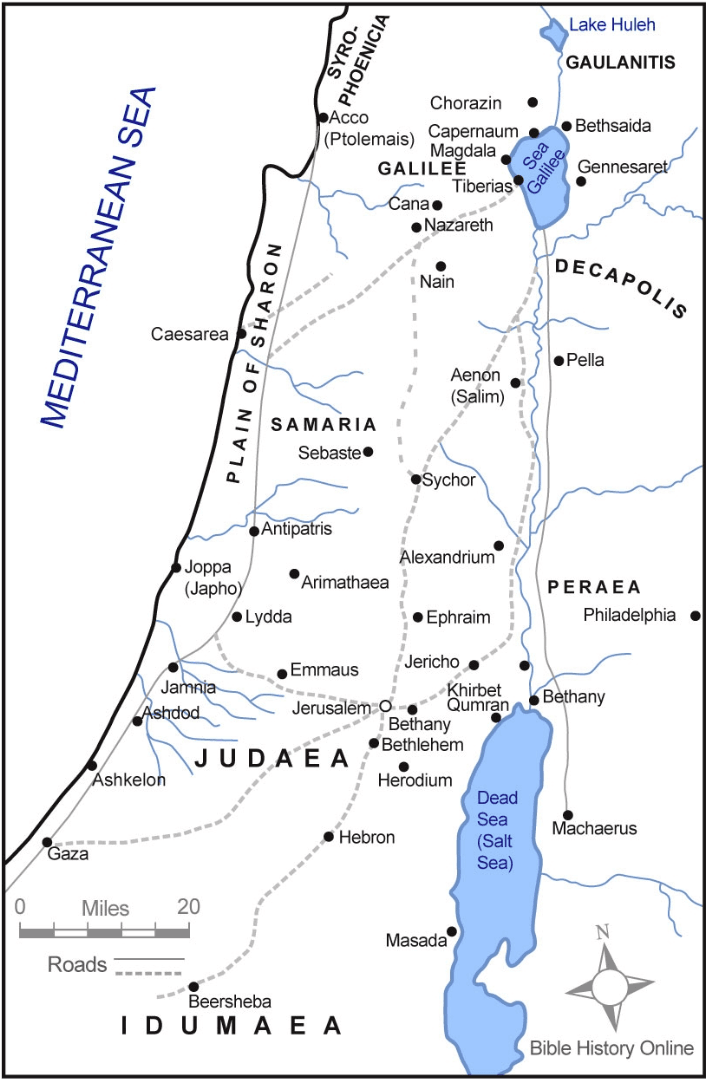
Israel essentially comprised Galilee and Judea, which meant that Samaria was sandwiched in between. To go to the Temple in Jerusalem from Israel, it was necessary to cross the Jordan into the Decapolis and travel ‘trans-jordan’ to avoid being ritually unclean and unable to attend the Temple. The journey back might be made through Samaritan country, as it was shorter.
Israel is about a third the size of Tasmania or twice the size of Greater Sydney. In the time of Jesus, the whole area was administered as a region of the Roman Empire, ruled by the Roman Governor and a Vassal King.
A Little History
When Abraham came from Ur of the Chaldees and settled in the Holy Land, he first arrived near Shechem, Samaritan territory at the time of Jesus. From there, he travelled to Bethel north of Jerusalem, and finally further south to Hebron. Today we would understand it as part of the West Bank.
Jacob, Abraham’s grandson, found a well near Sychar, most probably Schecham. This was taken as a significant site by the people, the well famous for constant fresh water, and the area for the close association with Abraham and Jacob.
History moved on, the enslavement in Egypt, the return and the Exodus. Ultimately, David became King over Israel, and in a move of strategic wisdom, he united the Northern and Southern Kingdoms and moved the capital to Jerusalem (city of peace), and the new temple was built there.
The area was where Abraham, at one stage, had paid tribute to Melchizedek, King of Salem.
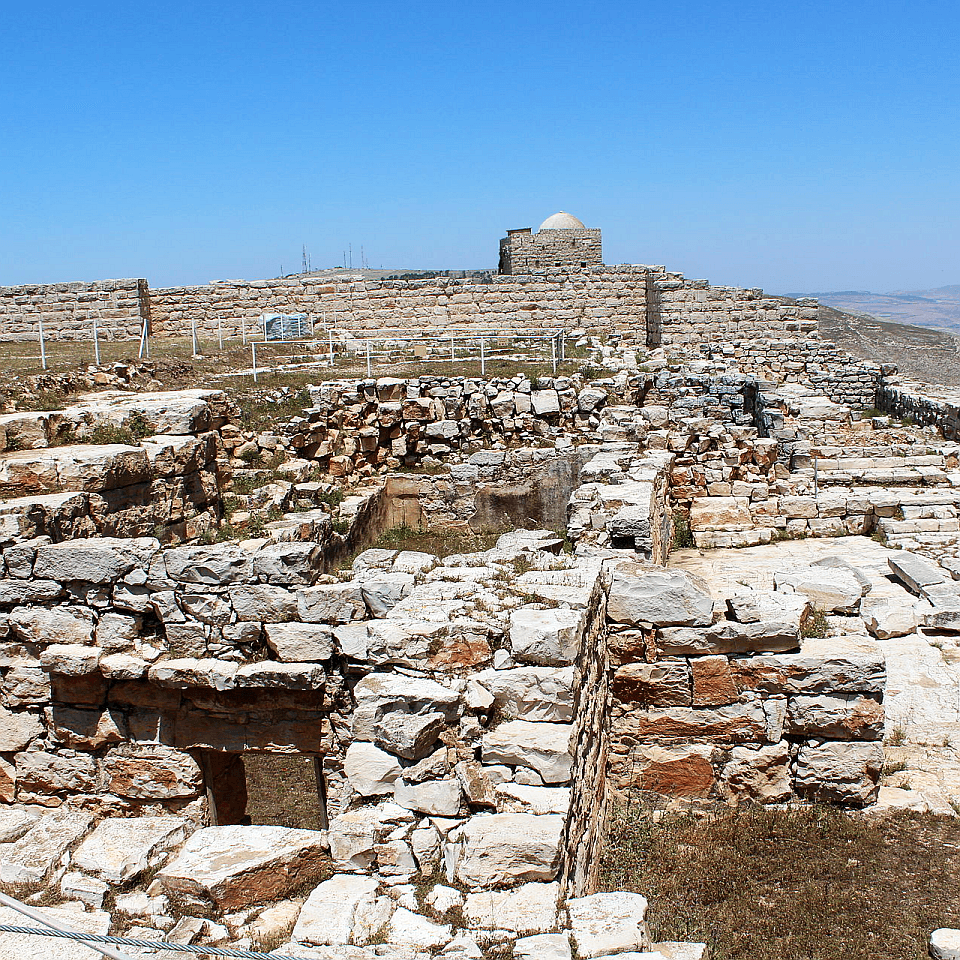
The Samaritans rejected the Temple, honouring the holy mountain and Jacob's well.
Scriptures
The Samaritans received as Scripture the five books we would call the Torah, namely Genesis, Exodus, Leviticus, Numbers and Deuteronomy.
They do not accept the idea of Kings, and the prophetic books were outside their realm.
The schism between Jews and Samaritans falls somewhere between 1400 and 1000bc. Some early Samaritan records suggest it was about offering sacrifices without salt.
Like all groups that are historically close, the differences run very deep, and the chasm can be very hard to cross. We know this in the historic divisions of the Christian Church, between East and West, between Catholics and Protestants, and in all manner of ways we find to divide.
The Jews and the Samaritans in Jesus' day had a historic distaste for each other. Even today, Samaritans have a stand-alone religious status in Israel, though conversions happen, often in terms of matrimony.
This is a Long Narrative
In terms of the 4th Gospel, this is probably the longest narrative. Much of the theological reflection is built into the narrative in this account. The linking passage is the theological reflection at the end of Chapter 3 under the title - The one who comes from Heaven.
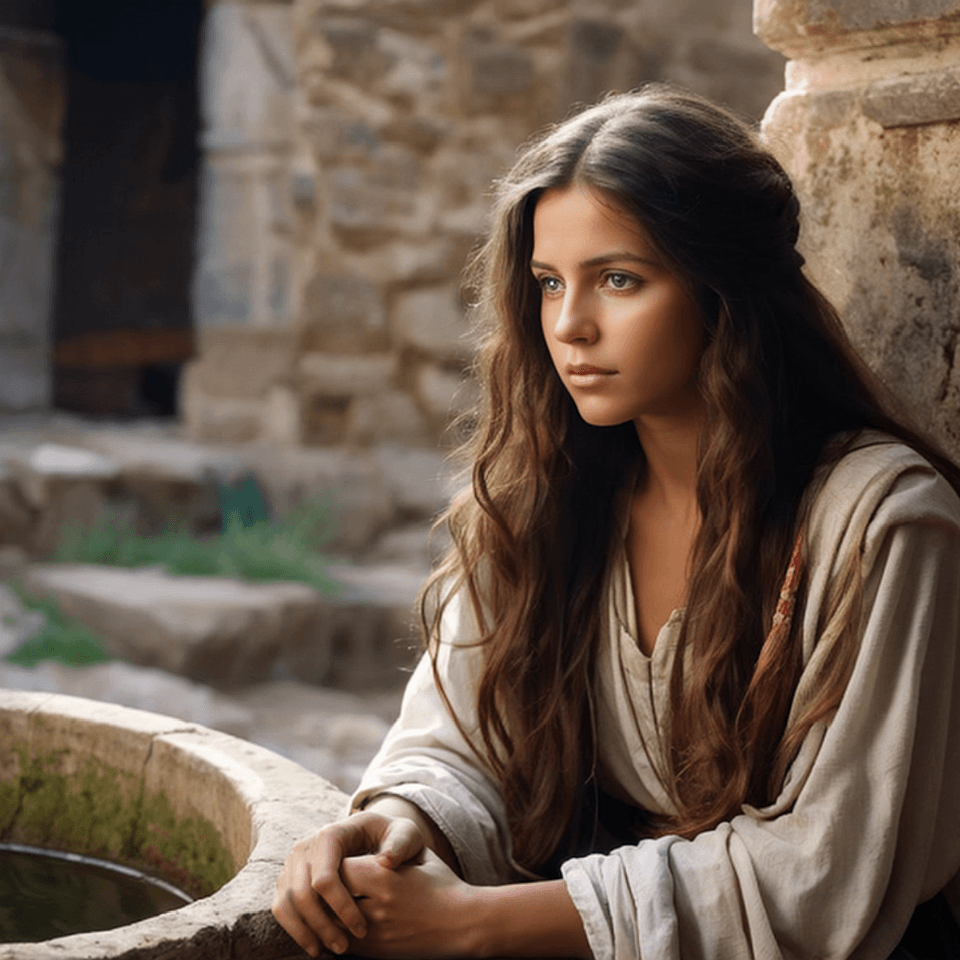
This passage is often referred to as The Woman at the Well. Whilst that is OK, in a way misses a great deal of one point that John wants to make here. It is critical to this story that she is a Samaritan Woman; otherwise, the story does not make sense.
One of the important questions in understanding the shock value of the story is to understand why, in the heat of the day, a woman would come to the well on her own.
Back to Galilee
When Jesus learned that the Pharisees had heard, ‘Jesus is making and baptising more disciples than John, ’ Jesus left Judea and started back to Galilee.
It seems that Jesus and the team of disciples have come to the notice of the Jewish authorities, and he makes the decision to return to Galilee.
It was not Jesus himself but his disciples who baptised. This point of clarification is added by John to the narrative, which was not made earlier in the story.
Sychar and the Well
Jesus had to go through Samaria. So he came to a Samaritan city called Sychar, near the plot of ground that Jacob had given to his son Joseph. Jacob’s well was there, and Jesus, tired out by his journey, was sitting by the well. It was about noon.
The necessity to go through Samaria is not evident, but presumably, if they had got to Sychar, they had been walking for several hours, and Jesus sat down by the well.
Now, the well here has history, and a lot of it, as this was Jacob’s Well, and represents a good part of the Samaritan argument with the Jews.
So far, the story is fairly ordinary: a long walk, a bit tired, it’s the middle of the day, and Jesus sits down by the well.
Give me a drink
A Samaritan woman came to draw water, and Jesus said to her, ‘Give me a drink’. (His disciples had gone to the city to buy food.)
Whilst it makes sense that Jesus was there in the middle of the day, given the journey, it makes less sense that the Samaritan Woman had come out by herself to draw water in the middle of the day, rather than in the cool of the morning with the other women. The reason for that will become apparent later.
So Jesus asks the woman for a drink. And we then have the scene completed with the disciples not being there as they have gone off to get food.
Of course, what is shocking in this setting is that Jesus the Jew has spoken to the Woman of Samaria at all, and that he has done so without a chaperone.
In the mind of the Jew and of the Upstanding Samaritan of the day, this has scandal written all over it.
How is It that you, a Jew
The Samaritan woman said to him, ‘How is it that you, a Jew, ask a drink of me, a woman of Samaria?’ (Jews do not share things in common with Samaritans.)
So, in case you didn’t get the scandal, John now spells it out for us in the words of the Samaritan Woman.
The issue is, of course, that Jews do not share things in common with Samaritans.
Of course, that is not wholly true. They share a level of common scripture, and they share an allegiance to the God of Abraham, Isaac and Jacob (Israel).
It is like saying catholics and protestants have nothing in common, failing to recognise most of the scripture and the creeds that they share.

Living Water
If you knew the gift of God, and who it is that is saying to you, “Give me a drink”, you would have asked him, and he would have given you living water.
Now, of course, the discourse has taken a twist. The water in Jacob’s was famous for being fresh, cool and refreshing, moving, not stagnant, and in every practical sense, the water in the well was lively, life-giving, and in that sense living. So Jesus words here are at least a little open-ended.
This, of course, is a come-in spinner dialogue, in that it allows the conversation progress to the next point.
So we are about to shift from this simple business of being thirsty to much deeper things.
Bucketless
Sir, you have no bucket, and the well is deep. Where do you get that living water? Are you greater than our ancestor Jacob, who gave us the well, and with his sons and his flocks drank from it?
Jews and Samaritans would not share a drinking vessel; Jesus can’t drink from her bucket, and he does not have his own.
Are you greater than our ancestor Jacob? This question is both challenging and provocative.
The honouring of the ancestors and most especially the Patriarchs was common in the Middle East at the time, and really to this day.
The fact that this is Jacob’s well is really important, and heartland country for the Samaritans.
Not Thirsty again
Jesus said to her, ‘Everyone who drinks of this water will be thirsty again, but those who drink of the water that I will give them will never be thirsty. The water that I will give will become in them a spring of water gushing up to eternal life.’
On the one hand, this seems to answer the question that has been posed, and Jesus is effectively saying, ‘yes I am greater than our common ancestor Jacob’
It is important not to neglect that this whole passage flows from the discussion of Baptism in chapter 3, and at the beginning of this passage.
John is also beginning to move the conversation from the physical to the spiritual.
Misunderstood
The woman said to him, ‘Sir, give me this water, so that I may never be thirsty or have to keep coming here to draw water.’
Again, we find this fumbling for understanding, which has a real sense of humour buried deep within it, as John draws out the meaning of the passage.
Now, for us who can’t imagine a house without a tap, we can easily miss this. If every time we wanted a drink, we had to walk downtown, get a bottle of water and walk home to drink it. We might get the point. Before tanks, before running water, what the woman says makes a lot of sense, even though it appears she has completely missed the point.
Husbandless
Jesus said to her, ‘Go, call your husband, and come back.’ The woman answered him, ‘I have no husband.’
Whilst it is not exactly clear why this is the next step, the question is interesting. A woman alone in the heat of the day, going out to the well, suggests she did not want to go out with the others, or that her company was not wanted by the others.
Her husbandless state may well have been a reasonable deduction.
Yet perhaps this also builds on the point made at the close of chapter 2, that Jesus did not trust himself to anyone, for he knew what was in people.
Called Right Out
Jesus said to her, ‘You are right in saying, “I have no husband”; for you have had five husbands, and the one you have now is not your husband. What you said is true!’
It is not quite clear if the significant other is not married or married to someone else.
At this point, the issue is clearly that the woman was not expecting to be laid bare,
Prophet
‘Sir, I see that you are a prophet. Our ancestors worshipped on this mountain, but you say that the place where people must worship is in Jerusalem.’
Rather than dwell on that, the conversation moves immediately to the essence of the problem between the Jews and the Samaritans.
Where are we supposed to worship?
For both of them, the answer was obvious and did not need discussion; it is just that the answers were different.
The use of the term prophet here suggests that the person sees beyond the surface and understands things at a deeper level.
In a way, the woman might be beating a hasty retreat from a discussion about her domestic arrangements, or perhaps that is simply an artifact of the story, and not regarded as of great consequence.
On the other hand, she may be pointing to the question Who is Jesus for the Samaritan people.
Neither, Nor
Woman, believe me, the hour is coming when you will worship the Father neither on this mountain nor in Jerusalem. You worship what you do not know; we worship what we know, for salvation is from the Jews
The response from Jesus clearly cuts through the thousand years of dispute that have led to this point, answering neither one way nor the other, but rather opening to a new alternative that neither of them has seen.
The kick in the tail in the last clause, ‘Salvation is from the Jews’, really describes Jesus position in humanity, for he clearly has good Jewish credentials.
The point here is, however, that Salvation is not necessarily for the Jews, and certainly not for the Jews alone.
The historic notions of the tribal or national God are being dispensed with, and the covenant is being thrown open.
Spirit and Truth
The hour is coming, and is now here, when the true worshippers will worship the Father in spirit and truth, for the Father seeks such as these to worship him.
Expanding on this, Jesus argues that the time has come for true worship to be in spirit and in truth.
Not so much about the right sacrifice in the right place and at the right time, not a diligent execution of ritual, but rather honesty and integrity in the expression of the relationship with God.
Spirit:
The essence of our internal being, our true nature at its deepest level.
Truth:
Not simply the performance of rite and ritual, but an absolute integrity of being.
It is no longer about where we are physically that God is concerned about, but about where we are spiritually, which is of the essence of what God is looking for in us.
God is Spirit
God is spirit, and those who worship him must worship in spirit and truth.’
This view of God, that God is Spirit, is common ground for both Jews and Samaritans. This indeed is a fundamental truth for both of them.
The conclusion that Jesus draws from this for us is that those who worship him must worship in spirit and truth.
Jesus calls us to worship God with fundamental integrity from the source of our being.
This fundamental truth in Scripture is often missed by those who want to paint God as ‘the old man in the sky’.
I am he
I know that Messiah is coming. When he comes, he will proclaim all things to us.
Jesus said to her, ‘I am he, the one who is speaking to you.’
As a Samaritan Woman, her expectation that the Messiah would proclaim all things is entirely consistent with Samaritan expectations.
The question, of course, remains whether she envisaged including the earlier discussion of her domestic arrangements.
Jesus says very simply, ‘I am he’.
No great fanfare, no crowd, here to a Samaritan Woman, Jesus simply declares, I am the one you are waiting for, I am the Messiah, in three simple words, I am he.
To Nicodemus, a leader of the Jews, there was no such declaration, but here to a Samaritan woman, we have the simple and clear declaration.
The Disciples Return
Just then, his disciples came. They were astonished that he was speaking with a woman, but no one said, ‘What do you want?’ or, ‘Why are you speaking with her?’
The disciples are now brought back to the narrative, having returned from town, and we are told they were astonished. In reality, it would have been thought that they would have nothing to talk about, and indeed it was probably improper that he was speaking with her without someone else being present, and that most normally would have been her husband (?).
The disciples, despite their astonishment, clearly take this wiser course and keep their own counsel.
Water Jar
Then the woman left her water-jar and went back to the city.
This small detail in John’s Gospel is immensely important from the Samaritan point of view, for John has painted the scene so that the Restorer has appeared with the water jar beside him. This accords with the Samaritan expectation and is essentially meaningless to the Jews.
This tells us that this passage is written with the Samaritan reader/hearer in mind.
In the Nicodemus account, we were asked to see Jesus as the fulfilment of Jewish expectation, and here we see Jesus as the fulfilment of Samaritan expectation.
Side-note: Water has been a big thing here, from John the Baptist, baptising, to Nicodemus with being born of water and Spirit, and not here, where Jesus offers living water beside Jacob’s well and the Samaritan Woman leaves her water jar.
Come and See
‘Come see a man who told me everything I have ever done! He cannot be the Messiah, can he?’ They left the city and were on their way to him.
We must presume that we do not have all the conversation, for all we know about is five husbands and a spare, and we would imagine there was more to her life than that.
Nonetheless, as a result of what she says, people leave the city on their way to meet him.
This mirrors what we heard about in Chapter One with the assembling of the apostolic band. Andrew found his brother Simon Peter, Philip found Nathaniel, and the woman found the people in the village. The words consistently are come and see.
So the encounter with Jesus seems to generate the desire that other people should have the opportunity to meet him as well. There are no long conversations, there is no argument; all we have is the invitation to come and see. This seems to be evangelism in the 4th Gospel.
Food
The disciples were urging him, ‘Rabbi, eat.’ He said to them, ‘I have food to eat you do not know about.’ The disciples said, ‘Surely no one has given him something to eat?’
So we were told earlier that the disciples had ducked into town to get some food. The immediate response from Jesus is that he has food to eat which they do not know about.
We have a classic Johannine misunderstanding where Jesus says something spiritual, and it is assumed at the temporal and physical level.
This, of course, is the exact match to the woman mistaking living water for the water in the well.
This theme will be more than a little expanded in chapter 6.
‘My food is to do the will of him who sent me and to complete his work.
And now we see again that John has juxtaposed spiritual and physical food in the way he has been playing with these concepts for some time in the Gospel.
Ripe Fields
Do you not say, “Four months more, then comes the harvest”? But I tell you, look around you, and see how the fields are ripe for harvesting.
And no, we have a change of tack again, with a dual message between the spiritual and the physical: the harvest is four months away, suggesting a time in early to mid-winter, and then the issue that it is, in fact, already harvest time.
This passage may seem somewhat unrelated to the story of the Woman at the Well. When you see it as the Samaritan Woman, however, it becomes a passage about the Samaritans and evangelism.
This seems quite different to Matthew 10.5: ‘Go nowhere among the Gentiles, and enter no town of the Samaritans.
Sower and Reaper
The reaper is already receiving wages and is gathering fruit for eternal life, so that sower and reaper may rejoice together.
This reflection is a powerful consideration about the evangelistic work of the Church.
The history and tradition of the Samaritan people have laid the foundation on which they might now receive the good news. Those who harvest may well rejoice; it is not simply their work, it is also the work of those who have laboured before.
The sower and the reaper are called to rejoice together. One person’s work is not more important than another's. It is a team effort.
For here the saying holds, “One sows and another reaps.” I sent you to reap that for which you did not labour. Others have laboured, and you have entered into their labour.’
We have heard for ourselves
Many Samaritans from that city believed in him because of the woman’s testimony, ‘He told me everything I have ever done.’ So when the Samaritans came to him, they asked him to stay with them; and he stayed there for two days. And many more believed because of his word. They said to the woman, ‘It is no longer because of what you said that we believe, for we have heard for ourselves, and we know that this is truly the Saviour of the world.’
In some way, this may seem a little harsh on the woman; the point of the text is the encounter each has with Jesus in their own right. They have come and seen and heard, so now they know.
Saviour of the
The traditional rendering of the text at the end of this passage is The Saviour of the World.
In some ways, that is a safe translation; the Greek 'o sooteer tou kosmou' could also be translated as " The Saviour of the Cosmos".
The point is that the question John is addressing for the whole of the Gospel, ‘Who is Jesus’ or Christology, has now been blown open, not simply the Jewish Messiah, but also the Samaritan Messiah, and indeed everyone’s Messiah.