Words have meaning and convey meaning. Sometimes, across cultures, those meanings can be difficult to translate in a way that truly conveys the meaning.
If I look for dictionary definitions of ‘country’, I am likely to find something like this:
A country is a distinct territory with defined borders, a permanent population, and its own functioning government. It acts as a sovereign state that manages its own internal affairs, economy, and relations with other countries. (AI-generated text)
When Aboriginal and Torres Strait Islander people speak of Country, this is not really what they mean, and indeed barely a pale reflection.
If I were looking for what First Australians might mean when they speak of Country, I might end up with something more like this:
For Aboriginal and Torres Strait Islander peoples, Country is a living, breathing entity and the ultimate source of life, identity, and culture. It goes far beyond the Western concept of land ownership, serving as a deep, holistic connection that shapes existence itself. (AI-generated text) (
The site Common Ground also has an article discussing this idea. (https://www.commonground.org.au/article/what-is-country)
When the Parish Acknowledgement of Country was recently updated, the term ‘country’ was used specifically with this idea of meaning deeply embedded in it. The words of that acknowledgement read:
Acknowledgement of Country
We acknowledge the First Australians with gratitude for their stewardship of country. In our Parish, we recognise the strength, resilience and continuing culture of the Awabakal and Darkinjung people, and affirm our commitment to walking together in a spirit of truth-telling, justice and reconciliation. (https://elm-anglican.au/)
People who have worked in Papua New Guinea will be familiar with terms such as ‘place’ and ‘place belong me’ (These are expressions well known in Pidgin English), which convey a sense of connection to an area, a tribe, and a community over time.
Disconnection with Country, or Place, is not simply a geographic thing; it is an emotional, social and spiritual reality as well, and reconnection is both liberation and redemption.
Europeans brought to this Australia ideas of fences and land ownership, which may be tidy at one level; however, this view of the land would struggle to come to terms with the traditional idea of Country as understood by the first Australians.
Ironically, Europeans also replicated their own connections to their old Country as they replicated place names, such as New South Wales, Newcastle, Swansea, Belmont, Cardiff and others, which were simply recycled uses of place names they were used to.

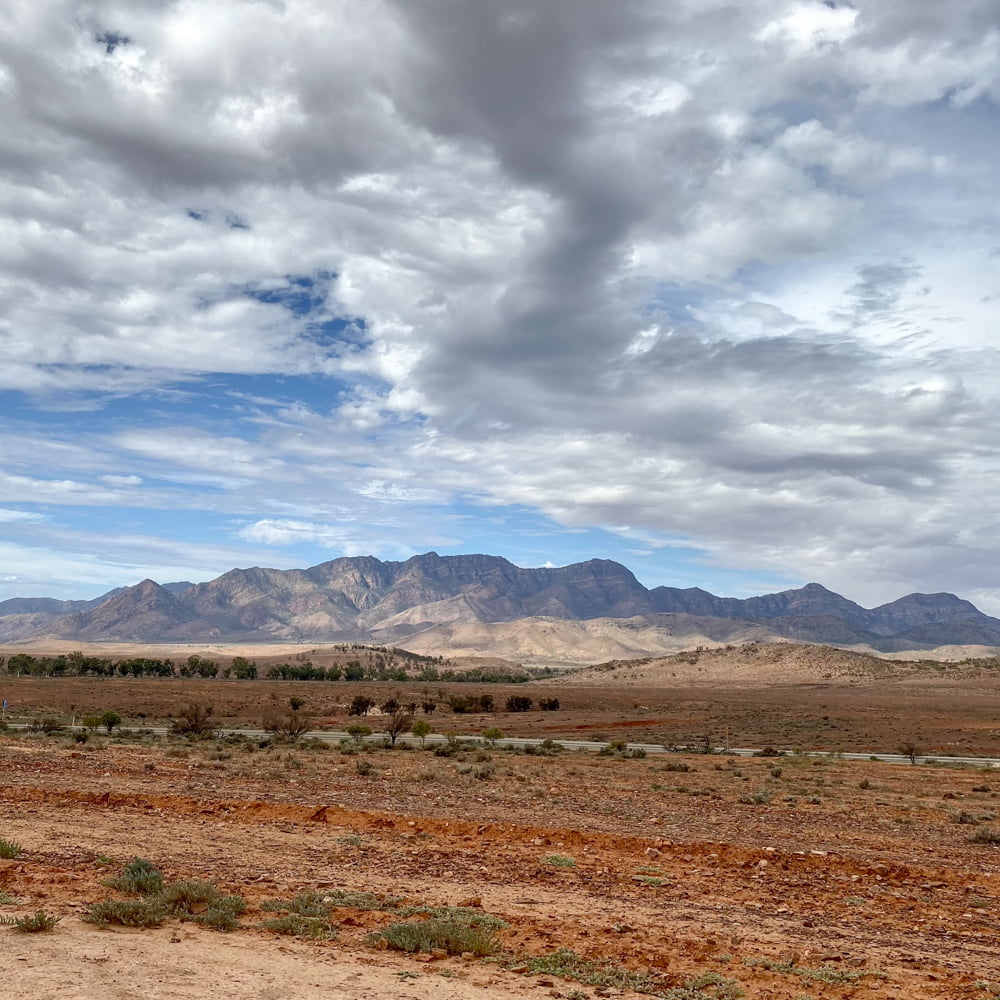
As Christians, indeed as Anglican Christians, we should be able to make some sense of Country from a First Australian perspective. We agree that life is more than meets the eye, more than energy and atoms bumping into each other. We might call it the dreamtime, or the spiritual world.
As Christians, our place, our country, is ‘in Christ’ (2 Corinthians 5:17). We express this in terms of Church - Ecclesia - those called out. Whilst the Church exists in time, it exists through time, and through geography as we express in the Nicene Creed - We believe in one, holy, catholic and apostolic church (The Nicene Creed.). It is here we find not simply belonging without ownership, but life, and the ground of our being.
This, of course, we encounter in many ways, not least of all in the local expression being our Parish Church. We know this very clearly in our Parish, having recently gone through the process of amalgamation and the closure of some churches. We have come through this and can breathe again.
If we reflect on our experience, perhaps we will be better able to understand what First Australians are saying. Our commitment to the path of reconciliation, and ultimately makarata (The journey forward after making peace), asks us to listen deeply and find connection built on mutual respect and integrity.
Abandonment is not an abstract feeling. It has the shape and sound of resentment. (Thomas Mayo - ‘The Monthly’ June 2026 in the article ‘For the love of Country’ p 24.)
Thomas Mayo’s rich and deep understanding of both Aboriginal and Torres Strait Islander conscience, as well as the needs of a modern nation, provides for the welfare of all, which means we need to find ways through this more meaningfully than we have.
‘Country’ is a term that includes its Indigenous context and meanings has only entered the lexicon of the History discipline relatively recently. In part, that recognition of country is an ethical one premised on the understanding that Indigenous knowledges had been excluded from Australian History for the better part of two centuries. ( Anna Clark, ‘The Making of Australian History’ 2022 Pengin Randon House Australia p 264)
Clearly, part of this is that we all know and acknowledge that Australian History did not begin in 1788 or 1770, but in the time before, where we struggle to find dates.
It is easy for our Acknowledgement of Country to slip into a routine of a checklist we tick off; however, it is also possible to allow that familiarity to become part of our ingrained understanding as we walk towards a positive future for all Australians.